Four Ways Terahertz Science Is Changing Modern Medicine
Terahertz (THz) science has had a significant impact on the development of modern medicine in several ways. Here are a few examples:
1. Imaging
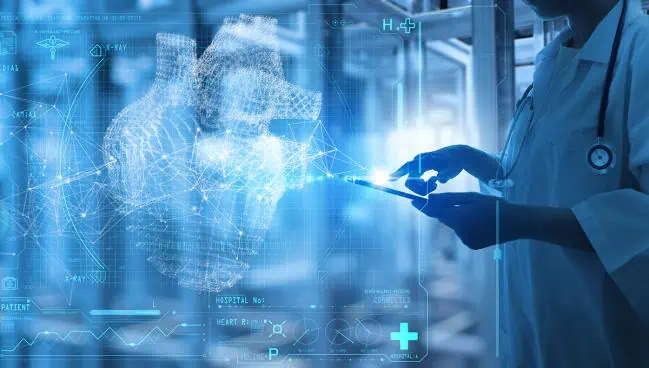
Terahertz waves, which are electromagnetic waves with frequencies between microwave and infrared radiation, can penetrate many materials, including biological tissues. This property has made terahertz imaging a promising tool for medical imaging. Terahertz imaging can provide high-resolution images of biological tissues, such as skin and teeth, without the use of ionizing radiation, which can be harmful. Terahertz imaging can also be used to detect early-stage cancer, as cancerous tissue has different terahertz absorption properties than healthy tissue.
Terahertz imaging is a non-invasive technique that is capable of providing images with a high level of detail. It can be used to visualize internal structures of biological tissues, such as blood vessels, without the need for contrast agents. Terahertz imaging has been used to detect early-stage breast cancer by identifying the differences in the absorption properties of cancerous and healthy tissue. This technique has the potential to revolutionize the early detection of cancer and improve patient outcomes.
2. Diagnostics
Terahertz spectroscopy is a technique that uses terahertz waves to study the vibrational modes of molecules. This technique can be used to detect and identify molecules in biological samples. For example, terahertz spectroscopy can be used to detect the presence of glucose in blood samples, which is important for the diagnosis and management of diabetes.
Terahertz spectroscopy has also been used to detect cancer cells in biological tissues. Cancerous tissue has a different terahertz absorption spectrum than healthy tissue, which allows for the detection of cancerous cells. Terahertz spectroscopy has the potential to revolutionize cancer diagnosis by providing a non-invasive, highly accurate technique for detecting cancerous cells.
3. Drug Development
Terahertz spectroscopy can also be used to study the structure and properties of drugs and drug molecules. This information can be used to optimize drug formulations and improve drug delivery. Terahertz spectroscopy can also be used to study protein structures, which is important for understanding the mechanisms of many diseases and for developing new drugs.
Terahertz spectroscopy has been used to study the crystalline structure of drugs, which is important for determining the solubility and stability of the drug. This information can be used to optimize drug formulations and improve the efficacy of drugs. Terahertz spectroscopy has also been used to study the protein structures of disease-causing molecules, which can provide insights into the mechanisms of many diseases and facilitate the development of new drugs.
4. Therapy
Terahertz radiation can be used for therapeutic purposes. For example, terahertz radiation can be used to destroy cancer cells or to treat skin conditions such as psoriasis. Terahertz radiation can also be used to enhance the delivery of drugs to specific tissues.
Terahertz radiation has the potential to be used in cancer therapy. It can be used to destroy cancer cells through a process called resonant absorption. This occurs when terahertz radiation is absorbed by the cancerous tissue, causing the tissue to heat up and ultimately leading to the destruction of the cancerous cells. Terahertz radiation has the advantage of being non-ionizing, which means that it does not cause damage to healthy tissue.
Terahertz radiation can also be used to treat skin conditions such as psoriasis. Psoriasis is a chronic skin condition that causes red, scaly patches on the skin. Terahertz radiation has been shown to reduce inflammation and promote healing in psoriatic skin. Terahertz radiation can also be used to enhance the delivery of drugs to specific tissues. This is achieved through a process called terahertz-induced transdermal drug delivery, which involves using terahertz radiation to open up pores in the skin and allow drugs to be delivered directly to the affected tissue.
Conclusion
Terahertz science has the potential to revolutionize modern medicine by providing new tools for imaging, diagnostics, drug development, and therapy. Terahertz imaging is a non-invasive technique that can provide high-resolution images of biological tissues without the use of ionizing radiation, which can be harmful. Terahertz spectroscopy is a powerful tool for detecting and identifying molecules in biological samples, which has important implications for the diagnosis and management of diseases such as diabetes and cancer. Terahertz spectroscopy can also be used to study the structure and properties of drugs and drug molecules, which can lead to the optimization of drug formulations and the development of new drugs. Terahertz radiation has the potential to be used for therapeutic purposes, including the destruction of cancer cells, the treatment of skin conditions, and the enhancement of drug delivery to specific tissues.
In conclusion, the applications of terahertz technology in modern medicine are vast and promising. With further research and development, terahertz science has the potential to greatly improve the diagnosis, treatment, and management of many diseases, ultimately leading to better patient outcomes and a brighter future for healthcare.