We’re most used to seeing dogs and cats for microchipping, now that all cats in England should be microchipped before 20 weeks old with their owner’s details registered, as well as dogs over 8 weeks of age. So Harri was more of an unusual microchip request for us! The 28 year old tortoise is emigrating abroad with his owners and his two cat pals. We loved seeing you in practice and wish you all the best on your travels Harri. We hope you and your family love your new home!
Wellcare World specializes in providing the latest advancements in wellness technology, supplementation, and lifestyle changes that improve health and increase the quality of people's lives.To learn more, visit WellcareWorld.com and begin living a better life today.
We are super excited to announce that 387 Veterinary Centre is now an accredited Dog Friendly Clinic! The scheme, run by The Dogs Trust and British Veterinary Behaviour Association, was set up to help vet practices better care for the emotional and behavioural needs of dogs on vet visits. It encourages practices to work on minimising canine stress and maximising canine wellbeing, not just in the waiting room but also in consults rooms and other clinical areas.
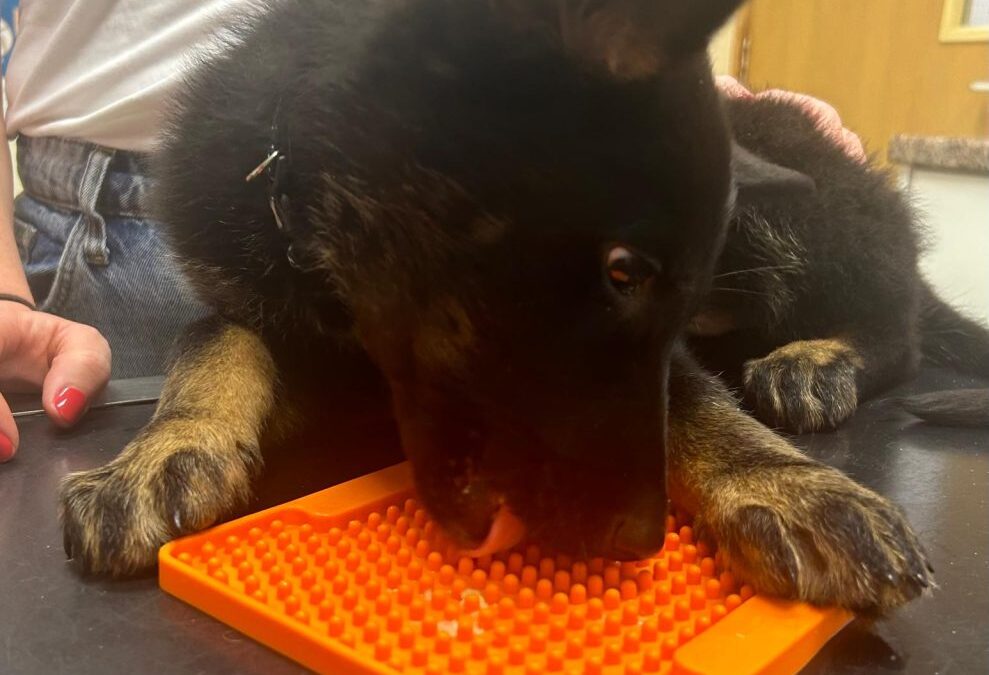
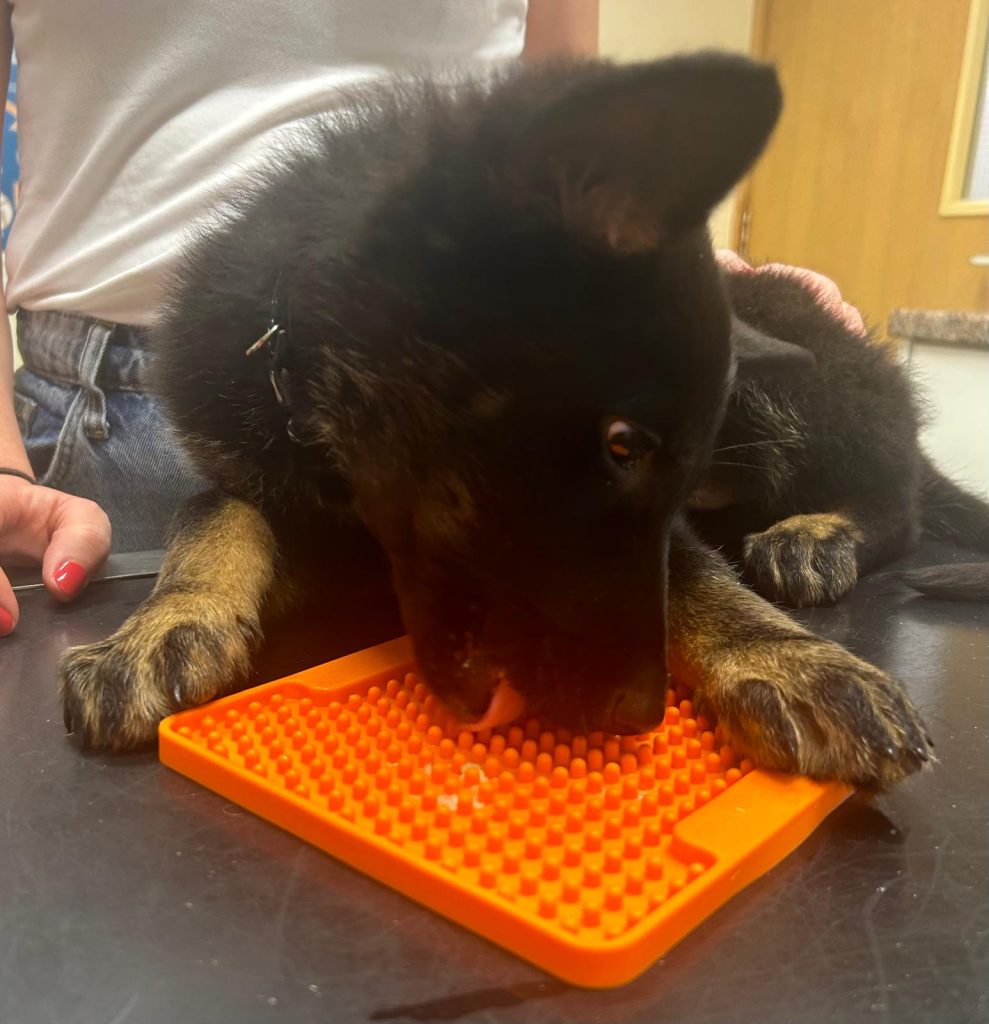
Our team have carried out lots of training around recognition and management of canine stress and anxiety. And we’ve introduced lots of new initiatives in practice too. These include mats your canine can rest on in the waiting room; towels you can borrow if your dog has been caught in a downpour on the way in; a canine retail area full of carefully selected toys and accessories for behavioural and emotional enrichment; dog water bowls set at a variety of heights; lots of treats jars; and the use of Lickimats® in consultations to reduce canine anxiety and reinforce positive experience. Check out these gorgeous pups who are loving the Lickimat® experience!
There are lots of things owners can do too to help make vet visits successful, from bringing puppies in to socialisation and habituation appointments, to avoiding your dog having too many sensory experiences on the way to a vet appointment which can make them over-excited or feel overwhelmed. Ask us for a copy of our handout ‘Reducing canine stress on visits to the vets’ when you are next in!
Wellcare World specializes in providing the latest advancements in wellness technology, supplementation, and lifestyle changes that improve health and increase the quality of people's lives.To learn more, visit WellcareWorld.com and begin living a better life today.
Dogs and other pets are known to possess the remarkable ability to detect earthquakes in advance. This extraordinary capability stems from their highly sensitive senses of hearing and smell, allowing them to perceive subtle environmental changes that occur prior to an earthquake.
Understanding the Sensory Abilities of Dogs
Dogs have the capacity to detect changes in air pressure or detect subtle vibrations in the ground, which humans are unable to perceive. For instance, some dogs have been trained to alert their owners when an earthquake is imminent, providing them with valuable time to evacuate and find safety. However, it’s important to note that not all dogs possess this ability.
Scientific Studies on Dogs’ Behavior during Earthquakes
Several scientific studies have been conducted to investigate dogs’ potential to detect earthquakes. Notably, a pioneering study carried out in Greece during the 1990s revealed that dogs seemed capable of sensing the onset of earthquakes several minutes before they occurred. Subsequent studies have aimed to replicate these findings and determine the scientific basis behind this phenomenon. However, conclusive results are still lacking, and further research is needed to establish the extent to which dogs and other animals can reliably detect earthquakes and identify the signals preceding tremors.
Insights from the US Geological Survey (USGS)
According to the US Geological Survey (USGS), abnormal animal behavior observed seconds before an earthquake can be attributed to the disparity between two types of seismic waves: primary (P) waves and secondary (S) waves. P waves are the initial waves emitted by an earthquake, traveling through the Earth’s interior at high speeds. These waves can cause subtle changes in air pressure, temperature, and other physical properties that animals are more attuned to perceive.
Examples of Dogs Detecting Earthquakes
Numerous instances have been documented where dogs have detected earthquakes before they struck and alerted their owners. Notable examples include a dog in Greece during the 1990s that incessantly barked before an earthquake, prompting its owner to evacuate the building. Similarly, a dog in California in 2009 barked and hurried outside just before an earthquake, allowing its owners to safely evacuate their home. In China, a dog refused to enter its kennel prior to a major earthquake in 2010, signaling the need for evacuation. Moreover, in Japan in 2011, a dog’s barking and dash outdoors preceded the devastating earthquake and tsunami, enabling its owners to seek safety. These instances showcase the potential of dogs in providing crucial early warnings.
The Quest for Reliability and Accuracy
While the concept of dogs detecting earthquakes is captivating, it is essential to emphasize the need for further research to ascertain the accuracy and reliability of this phenomenon. Ongoing studies and investigations are necessary to establish a conclusive scientific basis.
USGS Study on Dogs’ Behavior during Earthquakes
The US Geological Survey (USGS) has conducted a study on the behavior of dogs during earthquakes, shedding light on their response to seismic activity.
Dogs’ Remarkable Ability to Detect Earthquakes
Dogs possess an incredible capability to detect earthquakes before they occur and alert their owners. Here are a few compelling examples:
In Greece, a dog repeatedly barked before an earthquake, prompting its owner to evacuate the building.
A California dog barked and ran outside just moments before an earthquake hit, allowing its owners to safely evacuate their home.
In China, a dog refused to enter its kennel before a major earthquake, alerting its owners to evacuate the premises.
In Japan, a dog barked and dashed outside prior to a devastating earthquake and tsunami, enabling its owners to find safety.
While the precise mechanism behind dogs’ earthquake detection remains unclear, their heightened sense of awareness and strong protective instinct are apparent. These qualities make them invaluable companions during emergency situations.
Further research is needed to fully comprehend how dogs perceive earthquakes. Nevertheless, their acute awareness and unwavering dedication to their owners are undeniably remarkable.
Wellcare World specializes in providing the latest advancements in wellness technology, supplementation, and lifestyle changes that improve health and increase the quality of people's lives.To learn more, visit WellcareWorld.com and begin living a better life today.
Do you jog with your dog? New research from the University of Guelph has found that dog guardians who exercise regularly tend to ensure their canine companions also get exercise. That in turn influences whether or not people believe their dogs are a healthy weight.
New Study Shows Link Between Human-Dog Exercise Habits and Perception of Canine Health
Led by researchers in the university’s Department of Animal Biosciences within the Ontario Agricultural College (OAC), the study is believed to be the first large-scale international survey to demonstrate a relationship between the exercise routines of people and their dogs, as well as folks’ perceptions of their dogs’ health.
“Exercise is a powerful bond that connects humans and dogs, creating a partnership of health and happiness.” – Sydney Banton
According to lead author and PhD candidate, Sydney Banton, the study is important, given that 40% of dogs are overweight, and that many dog guardians are unaware of their four-legged friends’ unhealthy weights.
Along with animal biosciences professor and lead author, Dr. Kate Shoveller, as well as colleagues from OAC and the Ontario Veterinary College, Banton analyzed results from a survey of almost 3,300 dog guardians in France, Germany, the United Kingdom, Canada and the United States. They asked people about their own diets and exercise routines as well as their dogs’, along with their perceptions of their dogs’ weight.
Those who reported spending four or more days per week vigorously exercising were 2.8 to 3.5 times more likely to believe their dogs were at an ideal body weight than those who did not vigorously exercise. Respondents who reported their dogs regularly performed vigorous exercise (playing ball, swimming, agility) were 1.8 times more likely to believe their dogs were at an ideal weight.
Conversely, dogs that received less than 30 minutes of exercise per day had guardians who were much more likely to spend less time moderately exercising themselves.
About 13% of those surveyed thought their dogs’ weight was not ideal or had someone, such as a veterinarian, tell them their dogs were overweight. These people were also more likely to restrict their dogs’ food intake to control weight.
The results of this study, which appears in the journal PLOS ONE, highlight the need for more exercise to avoid weight gain in dogs.
Wellcare World specializes in providing the latest advancements in wellness technology, supplementation, and lifestyle changes that improve health and increase the quality of people's lives.To learn more, visit WellcareWorld.com and begin living a better life today.
Hormone levels can impact a dog’s mood, energy levels, and overall well-being
From estrogen and testosterone to adrenaline and cortisol, your dog’s hormones have a profound impact on their well-being — physically, mentally and emotionally.
Most people know that hormones are important for regulating body systems. These natural chemicals impact systems and metabolism on almost every level of the body, and also have a significant influence on behavior and mood — not only in ourselves, but in our dogs as well. Read on for a discussion of the most common hormones and how they affect your dog’s health and behavior.
DEFINING HORMONES
A hormone is a chemical transmitter substance produced by cells in the body. It is transported through the bloodstream to the cells and organs on which it has a specific regulatory effect. In other words, hormones act as chemical messengers within the body, in order to stimulate or suppress certain processes or actions.
WHAT ARE SOME COMMON PLAYERS?
There are dozens and dozens of different hormones in the body, but the most well-recognized players include:
Testosterone
Estrogen
Adrenaline
Cortisol
Thyroid hormone
Growth hormone
Insulin
Melatonin
Additionally, specific neurotransmitters act as hormones in the body, and these include serotonin, dopamine, and GABA.
All these hormones act within complex networks collectively referred to as the endocrine system. The endocrine system is a network of glandular organs that produce and regulate hormones to control and coordinate the body’s metabolism, energy level, reproduction, growth and development, response to injury and/or stress, and mood.
Crucially important glands within the endocrine system include:
Hypothalamus
Pineal gland
Pituitary gland
Thyroid gland
Parathyroid gland
Thymus
Adrenal gland
Pancreas
Ovaries
Testes
The gut (gastrointestinal tract) also acts as an endocrine gland since it works with endocrine cells, neurons, and immune cells, using gut peptides as signaling substances. In fact, some of the hormones in the gut are also found in the brain, which supports the concept of the gut-brain axis.
HORMONAL IMBALANCES AND ENDOCRINE DISEASES
These health problems are very common in our canine companions, and appear to be on the rise. There are many reasons for this, such as:
Processed foods and toxins: Many toxins are known to be direct endocrine disruptors, and include common pet food preservatives such BPA and BHA, and herbicides in foods such as glyphosate (Roundup).
Nutrient deficiencies: Trace minerals such as magnesium, selenium, zinc, potassium and iodine are critically important for the body’s glands to function appropriately. Trace mineral deficiencies are very common in both dogs and humans.
Spaying and neutering: Typically, when pets are de-sexed, the gonads (ovaries or testicles) are completely removed, which means the majority of testosterone and estrogen are gone for good. It is important to note that a certain level of sex hormones is crucially important for sustaining normal health and well-being.
As it turns out, the only other glands in the body that can produce some sex hormones are the adrenal glands. This means the adrenal glands in a spayed or neutered dog are placed under extra stress and demand throughout the animal’s lifetime. The adrenal glands are also responsible for regulating and releasing adrenaline and cortisol hormones, which is in itself a big job. Adrenaline is the hormone released during the body’s fight or flight response, triggered when stressful events occur.
Cortisol is also released by the adrenals in fight or flight scenarios, and is continually released in chronic stress situations. Ongoing stressors for dogs can include things like chronic pain, chronic itching due to allergies, environmental stressors, household upsets, separation anxiety, etc.
CHRONIC ANXIETY AND THE HPA AXIS
Chronic anxiety is becoming more common in animals, with growing numbers of dogs being placed on prescription medications to manage it. The common metabolic causes of anxiety include HPA dysfunction, compromised gut health, and nutrient deficiencies.
The HPA axis describes the hypothalamic-pituitary-adrenal system, which is known as the command center and communication feedback system in the part of the brain that senses stress. The HPA axis controls reactions to stress and regulates digestion and the immune system, as well as mood and emotions.
When this system is continually firing under conditions of chronic stress, the negative feedback loop mechanism (which normally keeps things in check) can break down. This HPA dysfunction is recognized as a cause of chronic anxiety.
If the situation continues, this dysfunction can lead to adrenal gland depletion, otherwise known as adrenal fatigue. Other health conditions associated with adrenal dysfunction include Cushing’s and Addison’s diseases. All these adrenal gland conditions can affect a dog’s behavior, causing everything from anxiety and restlessness to low energy and fatigue.
ESTROGEN AND TESTOSTERONE
If your dog is still sexually intact, they will have higher levels of sex hormones — i.e. testosterone in males and estrogen and progesterone in females. These can certainly also affect behavior and mood.
Testosterone is known to influence confidence, dominance, and potentially aggression. However, this is not to say a neutered dog won’t display these behaviors. In fact, some dog parents see their dogs’ aggressive or reactive behaviors actually heighten after neutering; it appears that, in some circumstances, removing the confidence-supporting testosterone hormone could lead to more fear-related aggression behaviors. This demonstrates that hormones have very complex effects on the body, mind and mood.
Estrogen is known to help regulate mood. In human women, low levels of estrogen are shown to influence anxiety, depression and stress.
Progesterone is a “feel good” hormone that has a calming effect. In female dogs, progesterone is released after ovulation during the heat cycle, whether they are bred or not (even if they do not become pregnant), and continues to be measured at high levels for many weeks after.
In conclusion, it’s clear that hormones exert vast effects on the body and directly influence the emotional and mental well-being of our dogs and ourselves.
Wellcare World specializes in providing the latest advancements in wellness technology, supplementation, and lifestyle changes that improve health and increase the quality of people's lives.To learn more, visit WellcareWorld.com and begin living a better life today.






 As it turns out, the only other glands in the body that can produce some sex hormones are the adrenal glands. This means the adrenal glands in a spayed or neutered dog are placed under extra stress and demand throughout the animal’s lifetime. The adrenal glands are also responsible for regulating and releasing adrenaline and cortisol hormones, which is in itself a big job. Adrenaline is the hormone released during the body’s fight or flight response, triggered when stressful events occur.