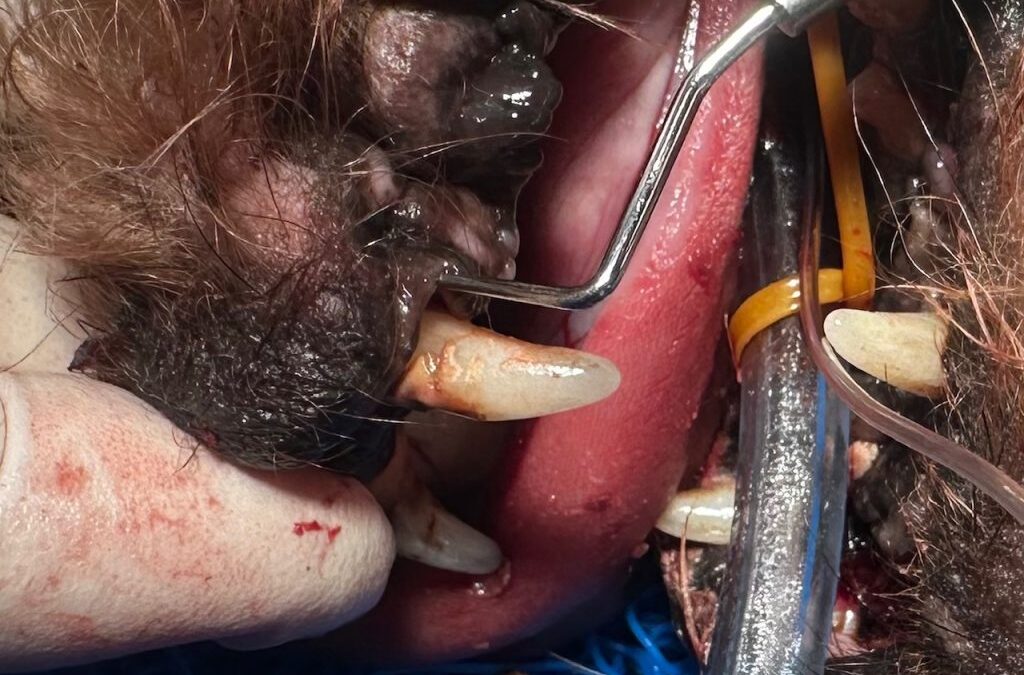
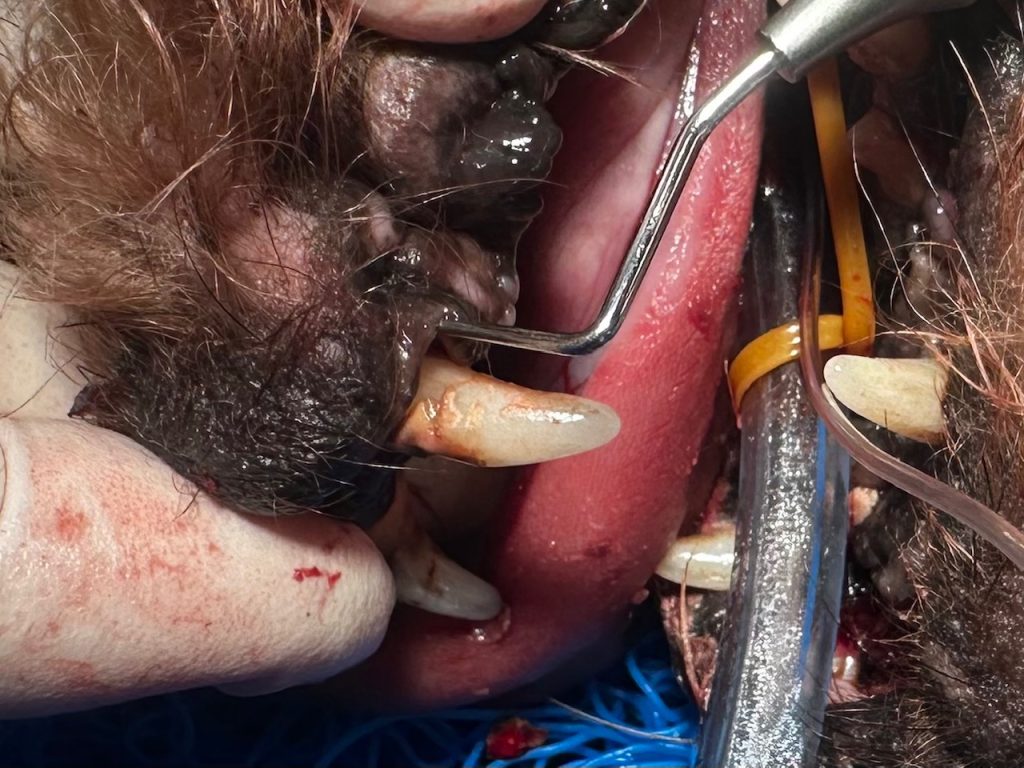
With the second week in February traditionally recognising National Tooth Ache Day, it’s important to remember that, just like us, our furry friends can get tooth ache too! If you notice your pet has smelly breath or is drooling, chewing on one side of their mouth, pawing at their mouth, eating more slowly or choosing to eat wet food over dry biscuit, it could be that they are suffering from some kind of dental or oral issue. There are many causes of dental and periodontal pain. These can include inflamed gums, tooth decay, broken or fractured teeth, damaged enamel, painful growths and, in cats, resorptive lesions, where teeth decay from the root upwards. Ouch! If you notice any of these symptoms, please do book your pet in for a dental examination with a vet as it’s likely your pet is in significant discomfort.
Even if there are no obvious indications of a problem, regular pet dental health check ups are really important. Did you know periodontal disease (inflammation and infection of the tissues supporting the teeth) is one of the most common health issues in pets? And that pets can be really good at hiding pain?
We ideally recommend 3-6 monthly checks for pets and at very least, once a year. Give us a call on 01922 411755 to arrange your pet’s dental check up. Get in touch too to book in for advice on oral hygiene routines to keep dental and periodontal disease at bay.
Wellcare World specializes in providing the latest advancements in wellness technology, supplementation, and lifestyle changes that improve health and increase the quality of people's lives.To learn more, visit WellcareWorld.com and begin living a better life today.
When 387 Vets is closed, we provide an out of hours emergency service through Pool House Veterinary Hospital in Lichfield. Please continue to ring 01922 411755 and follow the instructions. Are your pet’s symptoms a health emergency? Use VidiVet or our symptom checker to find out.
Wellcare World specializes in providing the latest advancements in wellness technology, supplementation, and lifestyle changes that improve health and increase the quality of people's lives.To learn more, visit WellcareWorld.com and begin living a better life today.
Did you know that September is Sepsis Awareness Month? Our student nurse Isabel is particularly passionate about promoting awareness about the condition as she very sadly lost her brother to sepsis. If you’re due in for a visit this month, please help yourself to one of UK Sepsis Trust’s leaflets on display in our waiting areas. Knowing the signs of sepsis – an emergency condition – could save a life.
Sepsis is where the immune system overreacts to an infection, and whilst not preventable, it is treatable if caught quickly. Typical signs in adults include slurred speech, extreme shivering, severe breathlessness, mottled skin and passing no urine. In children, signs include fast breathing, convulsions, a mottled rash, being very lethargic and feeling abnormally cold to touch. If you or someone you know exhibit any of these symptoms, seek urgent medical attention and ask, “Could it be sepsis?” You’ll see this slogan on the side of lots of ambulances.
As well as leaflets, Isabel has brought in a limited number of promo giveaways from The UK Sepsis Trust. So, for early birds picking up a leaflet from us this month, you may be lucky enough to pick up a treat too!
Wellcare World specializes in providing the latest advancements in wellness technology, supplementation, and lifestyle changes that improve health and increase the quality of people's lives.To learn more, visit WellcareWorld.com and begin living a better life today.
When 387 Vets is closed, we provide an out of hours emergency service through Pool House Veterinary Hospital in Lichfield. Please continue to ring 01922 411755 and follow the instructions. Are your pet’s symptoms a health emergency? Use VidiVet or our symptom checker to find out.
Wellcare World specializes in providing the latest advancements in wellness technology, supplementation, and lifestyle changes that improve health and increase the quality of people's lives.To learn more, visit WellcareWorld.com and begin living a better life today.
An ear infection occurs when one of your eustachian tubes becomes swollen or blocked, causing fluid to build up in your middle ear. When one of your eustachian tubs becomes swollen and blocked, fluid builds up in the middle ear. Eustachian tube is a small tube that runs from each ear to the back part of the throat. Blockage of the eustachian tubes can be caused by:
allergies
colds
sinus infections
excess mucus
smoking
infected or swollen adenoids (tissue near your tonsils that trap harmful bacteria and viruses)
changes in air pressure
RISK FACTORS
Risk factors for ear infections. Ear infections occur most commonly in young children because they have short and narrow eustachian tubes. Infants who are bottle-fed also have a higher incidence of ear infections than their breastfed counterparts. Other factors that increase the risk of developing an ear infection are:
altitude changes
climate changes
exposure to cigarette smoke
pacifier use
recent illness or ear infection
What are the symptoms of ear infections?
A few of the common symptoms of ear infections include:
mild pain or discomfort inside the ear
a feeling of pressure inside the ear that persists
fussiness in young infants
pus-like ear drainage
hearing loss
These symptoms might persist or come and go. Symptoms may occur in one or both ears. Pain is usually more severe with double ear infection (infection in both ears). Chronic ear infection symptoms may be less noticeable than those of acute ear infections.
Children younger than 6 months who have a fever or ear infection symptoms should see a doctor. Always seek medical attention if your child has a fever higher than 102°F or severe ear pain.
Explore the interactive 3-D diagram below to learn more about ear infections.
How are ear infections diagnosed?
Your healthcare provider will examine your ears with an instrument called an otoscope that has a light and magnifying lens. Examination may reveal:
redness, air bubbles, or pus-like fluid inside the middle ear
fluid draining from the middle ear
a perforation in the eardrum
a bulging or collapsed eardrum
If your infection is advanced, your doctor may take a sample of the fluid inside your ear and test it to determine whether certain types of antibiotic-resistant bacteria are present. They may also order a computed tomography (CT) scan of your head to determine if the infection has spread beyond the middle ear. Finally, you may need a hearing test, especially if you’re suffering from chronic ear infections.
Video Consultation with a Doctor about Your Ear Infection
The doctor can call in a prescription for antibiotics, ear drops, or other medicine to help. Insurance can be used or simply pay a flat fee.
How are ear infections treated?
Most mild ear infections clear up without intervention. Some of the following methods are effective in relieving the symptoms of a mild ear infection:
applying a warm cloth to the affected ear
taking over-the-counter pain medication such as ibuprofen or acetaminophen
using over-the-counter or prescription ear drops to relieve pain
taking over-the-counter decongestants such as pseudoephedrine
If your symptoms get worse or don’t improve, you should schedule an appointment with your doctor. They may prescribe antibiotics if your ear infection is chronic or doesn’t appear to be improving. If a child under the age of 2 presents with ear infection symptoms, a doctor will likely give them antibiotics as well. It’s important to finish your entire course of antibiotics if they’re prescribed.
Surgery may be an option if your ear infection isn’t eliminated with the usual medical treatments or if you have many ear infections over a short period of time. Most often, tubes are placed in the ears to allow fluid to drain out. In cases that involve enlarged adenoids, surgical removal of the adenoids may be necessary.
What can be expected in the long term?
Ear infections usually clear up without intervention, but they may recur. The following rare but serious complications may follow an ear infection:
hearing loss
speech or language delay in children
mastoiditis (an infection of the mastoid bone in the skull)
meningitis (a bacterial infection of the membranes covering the brain and spinal cord)
a ruptured eardrum
How can ear infections be prevented?
The following practices may reduce the risk of ear infection:
washing your hands often
avoiding overly crowded areas
forgoing pacifiers with infants and small children
Wellcare World specializes in providing the latest advancements in wellness technology, supplementation, and lifestyle changes that improve health and increase the quality of people's lives.To learn more, visit WellcareWorld.com and begin living a better life today.