10 Best Posterior Chain Exercises for Stronger Lifts

10 Best Posterior Chain Exercises for Stronger Lifts

Exercising is overall great for your body’s health. But if your workouts target specific areas of your body, it is highly possible that you will obtain the desired results in a short period of time. The same goes for posterior chain exercises.

Posterior chain exercises for stronger lifts are responsible for building and toning the muscles at the back of your body. Flexibility and coordination is also an advantage of these exercises. Lifting weights exert more pressure on your muscles. Don’t forget to add a healthy diet to your workout routine.

1. What is a Posterior Chain?

The muscles at the back of your spine and legs are called the posterior chain muscles. They extend down from your skull to your calf and glutes. These are the most important muscles in your body as they strengthen an athlete’s explosiveness.

These muscles make up the posterior chain including the erector spine muscles, gluteus maximus, hamstrings, and calf muscles. Posterior chain muscles are responsible for straight body posture and hip joint mobility.

2. What are Stronger Lifts?

The lifting of heavy weights with proper form and technique is involved in stronger lifts. It increases muscle mass as well as strengthens your body muscles.

The increase in weight must be gradual. Avoiding overtraining reduces the chances of injury. Consistent training and proper nutrition are a must.

3. 10 Best Posterior Chain Exercises For Stronger Lifts

It targets posterior chain muscles only but effects can be seen in your whole body. Even your mood becomes better after just a session of the following exercises.

3.1. Kettlebell Swing

Kettlebell swings are great for the posterior chain and cardiovascular fitness. This exercise targets the muscles of the posterior chain which includes the glutes, hamstrings, and lower back. It is also beneficial for your core muscles.

To perform kettlebell swings:

  • Stand with your feet shoulder-width apart.
  • Hinge at your hips and grab the kettlebell with both hands.
  • While keeping your arms straight, swing the kettlebell between your legs.
  • Meanwhile your chest must be up with your back in a straight position.
  • When you reach the other end of the swing, drive your hips in the forward direction and squeeze your glutes.
  • Bring the kettlebell across your shoulder height with your arms in a straight position.
  • Repeat the whole exercise for 6 minutes and rest for 1 minute between each rep.
Number of Reps Time Rest
17 Reps on Each Side 6 Minutes 1 Minute

Kettlebell swings are recommended for conditioning exercises. For stronger lifts, you must start with a lighter weight and then gradually increase the weight.

3.2. Romanian Deadlift

The Romanian Deadlift (RDL) is a posterior chain exercise designed especially for strengthening your hamstrings and glutes. It also aids in developing a great body posture.

To Perform the Romanian Deadlifts:

  • Stand with your feet hip-width apart with the barbell in front of you on the ground.
  • The barbell must be close enough that it touches your legs.
  • Hinge forward at the hips while keeping your back straight and knees slightly bent.
  • Grab the barbell and stand straight while squeezing your glutes.
  • Pause in the standing position for a second and lower the barbell back to the ground.

The Romanian deadlift is different from the conventional deadlift as it concentrates on the eccentric or lowering phase of the lift. That is why it is recommended for building hamstring and glute strength. Keep your back straight and your core engaged to avoid injuries.

Number of Reps Time Rest
8-15 Reps on Each Side 5 Minutes 60 Sec

3.3. Chin-Ups

Chin-ups primarily target the upper back muscles. These are performed by hanging from a bar with your palms facing your body and pulling your body upward until your chin is above the bar.

To Perform Chin-Ups:

  • Stand in front of a pull-up bar and hold the bar with your palms facing your body.
  • The bar must be high enough that your feet must not touch the ground.
  • Your hands must be slightly wider than the shoulder-width distance.
  • Engage your back muscles and pull your body towards the bar until your chin is above the bar.
  • Inhale when you go up the bar and exhale when you appear in the original position.
  • Repeat the exercise for 5 to 6 minutes.
  • Increase the reps of the exercise when you feel complacent with existing weight.
Number of Reps Time Rest
12 Reps on Each Side 4 Minutes 60 Sec

3.4. Pendlay Row

Pendlay row is a weightlifting exercise that targets the upper back muscles: latissimus dorsi, and trapezius. It was named after the weightlifting coach, Glenn Pendlay. It is a variation of the bent-over barbell row. When compared with the bent-over barbell, pendlay row allows you to reset your form and generate more power on each repetition. It allows your body to lift heavier weights and build more strength in your upper back muscles.

To perform pendlay row exercise:

  • Stand in front of the barbell with your feet hip-width apart.
  • Grab the barbell by bending your knees. Your grip on the barbell must be an overhand grip.
  • Your back must be straight and your shoulders lifted.
  • Pull the barbell towards your chest, keeping your elbows close to the body.
  • After lifting the weight, you will feel a contraction in your chest.
  • As the barbell reaches your chest, lower it back to the initial position.
Number of Reps Time Rest
15-20 Reps on Each Side 8 Minutes 1 Min

3.5. Cobra

Although there aren’t any weights involved in cobra, this exercise allows you to build flexibility.

To perform the cobra exercise:

  • You must lay by facing down on the ground.
  • Keep your arms by your side and rotate your hands in such a way that your thumbs are pointed towards the roof.
  • Lift your chest off the ground and squeeze your glutes.
  • Hold the position for at least 1 minute and repeat the exercise at least 5 times.

3.6. Cable Pull-Through

The cable-pull-through is an exercise that targets the glutes, hamstrings, and lower back muscles. It is performed using a cable machine, which provides resistance across a wide range.

To perform cable-pull through:

  • Stand straight across the cable machine facing the opposite side.
  • Keep your feet shoulder-width apart and straighten your back.
  • Grab the rope handle with an overhand grip.
  • Hinge at the hips and push your hips back as you lower yourself towards the ground.
  • Keep your back flat and your head upward.
  • Squeeze your glutes and push your hips forward as you stand back up to the starting point.
  • Pull the rope handle up and forward as you rise.
Number of Reps Number of Sets Time Rest
8-15 Reps on Each Side 2-3 Sets 5 Minutes 2 Min

3.7. Hip Thrusts

Hip thrusts are a lower body strength exercise. They are responsible for glute strength along with building endurance in the hamstrings.

To perform hip thrusts:

  • Sit on the ground with your back against the bench or any elevated surface.
  • Your feet must be flat on the ground, with bent knees and feet hip-width apart.
  • Roll a barbell over your legs until it rests across your hip bones.
  • Engage your glutes and lift your hips off the ground until your body is in a straight position. In short, lift the barbell with your hips.
  • Lower your hips back to the initial position and keep your glutes and hamstrings tense.
  • Inhale as you lift the barbell and exhale when you come down on the ground.
Number of Reps Number of Sets Time Rest
5-8 Reps on Each Side 3-5 Sets 6 Minutes 60 Sec

3.8. Barbell on the Back

Barbell on the back is also called “Good Morning”. It is another form of Romanian deadlift. This exercise provides a much greater bend at the hips than the simple barbell squat. The difference between the two is that the barbell on the back builds more flexibility than the barbell squat. It is also good exercise for your hip flexors.

To perform barbell on the back:

  • Lift the barbell on your upper back just below the base of your neck.
  • Squat down bending at your hips and knee until your thighs are parallel to the ground.
  • Squeeze your glutes and your hips must be protruding out, unlike the barbell squat.
  • Arrive at the initial position and complete 3 sets of 6-8 reps for the exercise.
Number of Reps Number of Sets Time Rest
6-8 Reps on Each Side 3 Sets 10 Minutes 2 Min

3.9. Barbell/Dumbbell Row

Barbell/Dumbbell rows not only target your glutes and hamstrings but also target your upper body muscles. It can also be performed with a single arm. By performing the single-arm barbell row, the whole exercise intensifies and leaves a more long-lasting effect on your posterior chain muscles.

To perform barbell row:

  • Stand with your feet shoulder-width apart.
  • Bend at your hips to grab the barbell with both hands.
  • Your position must be that the inside of your elbow joint grazes your knee.
  • Lift the barbell up and hinge your hips while putting pressure on your thighs and glutes.
  • You can also lift the barbell to your chest and it will target the muscles of your back.
Number of Reps Number of Sets Time Rest
8-20 Reps 4 Sets 15 Minutes 2 Min

To perform single-arm dumbbell row:

  • Place your leg on a bench and secure position with your hand on the bench.
  • Your upper body must be parallel to the floor.
  • With your free hand, lift the dumbbell.
  • Hold the weight and make sure that your lower back is straight.
  • Breathe out and lift the weight to the side of your chest
  • You will notice that your back muscles contract when you lift the weight.
  • Breathe in as you go down.
  • Repeat the movement with your other arm.
Number of Reps Number of Sets Time Rest
6-8 reps on each side 3-4 sets with each arm 10 minutes 1 min

3.10. Kettlebell Deadlift

Kettlebell deadlift is an exercise used to build body strength. Core stability is also one of the benefits of kettlebell deadlifts. In short, you lift the deadlift with your hips without putting much pressure on your back.

To perform kettlebell deadlifts:

  • Stand with your feet shoulder-width apart.
  • Hinge at the hips while bending your knees slightly. Your back must be straight.
  • Grab the kettlebell with your hands with an overhand grip.
  • Your arms must be straight as you lift the kettlebell.
  • Breathe in while lifting the kettlebell and breathe out as you go back to the initial position.
Number of Reps Number of Sets Time Rest
5-12 Reps 3-4 Sets 10 Minutes 40 Sec

4. Importance of Posterior Chain Exercises
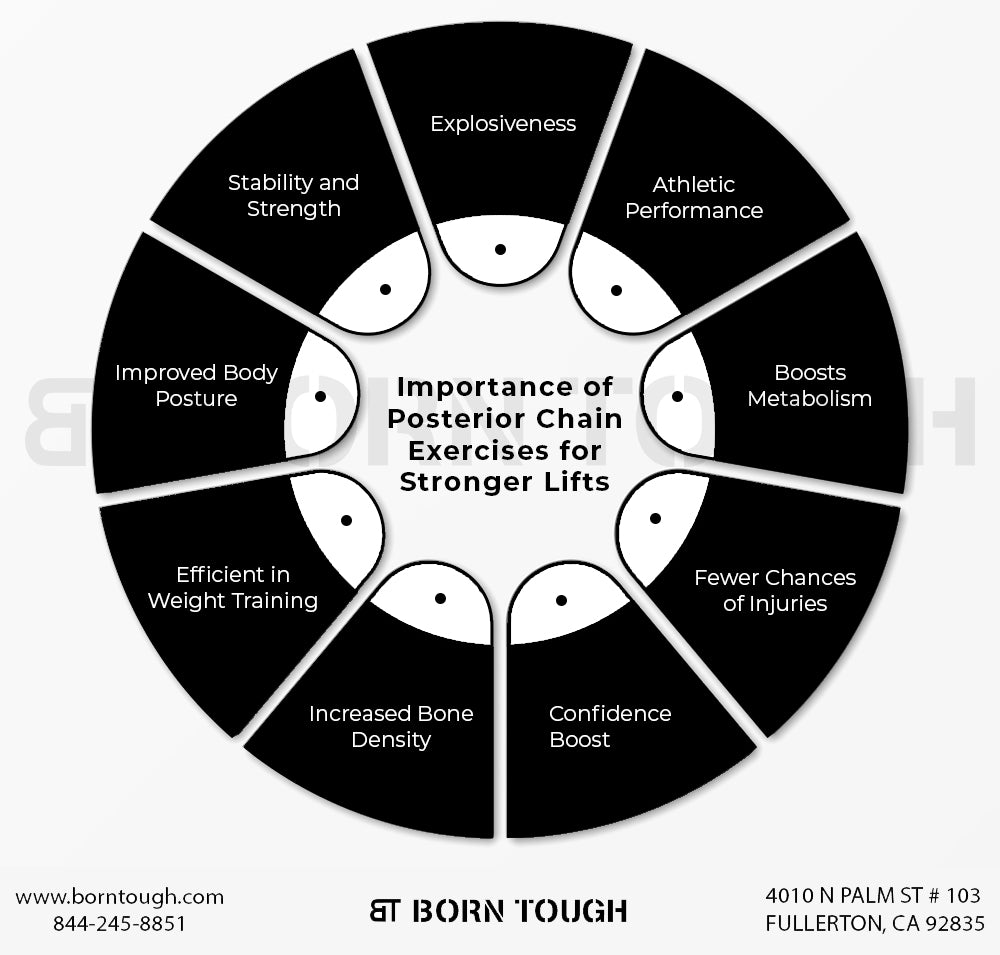
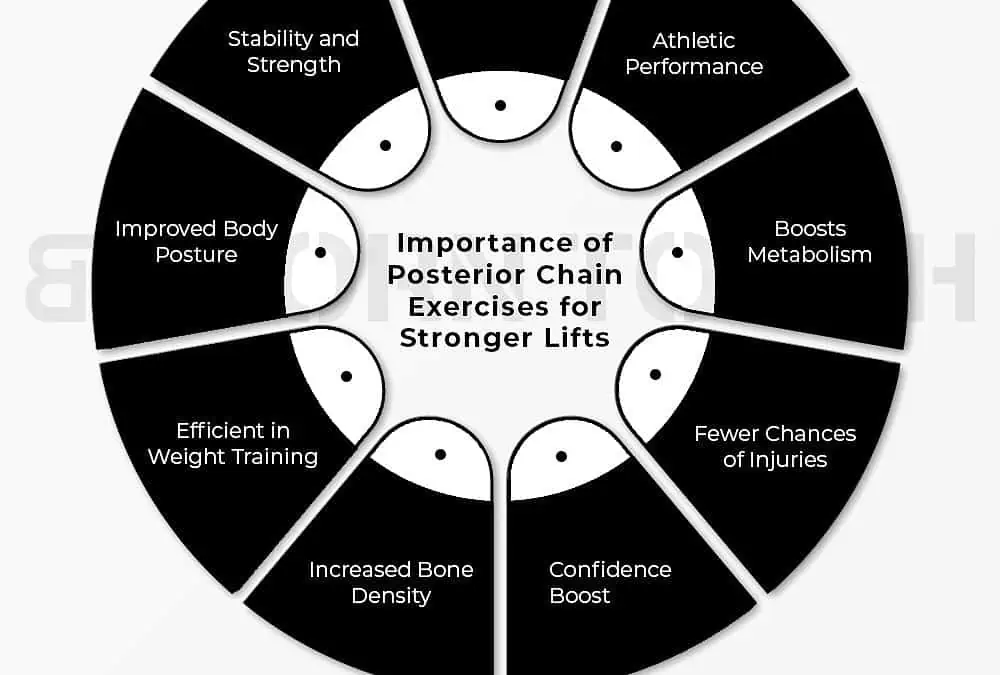
Importance of  Posterior Chain Exercises

  • Posterior chain exercises are great for building strength in your back muscles.
  • The most visible change that you feel in your body is your fast pace. Even if you aren’t an athlete, your body will develop explosiveness.
  • The above-mentioned exercises are specifically listed for you to develop stronger lifts.
  • The muscles of the posterior chain are crucial for maintaining a great body posture. Strong glutes and hamstrings keep the spine in a perfect position that eventually leads to a great body posture.
  • Working out displays immediate changes to your body. An increase in metabolic activity is the most obvious change after performing posterior chain exercises.

5. FAQs

5.1. Are Posterior Chain Exercises Great for Pelvic Mobility?

Pelvic Mobility is one of the core benefits of posterior chain exercises. The hip hinge joint develops great flexibility that makes movement easy for individuals.

5.2. Does Muscle Mass Increase with Posterior Chain Exercises?

Definitely, an increase in muscle mass is also an essential factor. More nutrients and supplements reach your muscles. Along with strengthening, your muscles also gain mass.

6. Conclusion

After reading this article, you are fully aware of how crucial posterior chain exercises are for your fitness. They not only shape your muscles but also develop strength and coordination. And do not forget to add a proper nutritious and healthy diet to your routine for fast results.

It is important to link other factors such as sleep and rest to your workout routine. It will leave an immensely positive effect on your body.

“This article is originally posted on borntough.com, and borntough.com own the sole copyright on this article. If you read this article outside borntough.com, please report this website to the authority because they have stolen the content from borntough.com and violated borntough copyright”

Offered by our Wellcare World friend at

Born Tough

Trending Also -> Physiotherapy Terahertz Technology TeraMD

Wellcare World specializes in providing the latest advancements in wellness technology, supplementation, and lifestyle changes that improve health and increase the quality of people's lives. To learn more, visit WellcareWorld.com and begin living a better life today.

Share Us With Others


Active Folks Have Active Dogs, Says New Study

shutterstock 1230561682 e1683230918169 | Active Folks Have Active Dogs, Says New Study | A recent study has highlighted the correlation between active individuals and their active dogs, shedding light on the importance of exercise for both humans and their canine companions. | Wellcare World | exercise

Do you jog with your dog? New research from the University of Guelph has found that dog guardians who exercise regularly tend to ensure their canine companions also get exercise. That in turn influences whether or not people believe their dogs are a healthy weight.

New Study Shows Link Between Human-Dog Exercise Habits and Perception of Canine Health

Led by researchers in the university’s Department of Animal Biosciences within the Ontario Agricultural College (OAC), the study is believed to be the first large-scale international survey to demonstrate a relationship between the exercise routines of people and their dogs, as well as folks’ perceptions of their dogs’ health.

“Exercise is a powerful bond that connects humans and dogs, creating a partnership of health and happiness.” – Sydney Banton

According to lead author and PhD candidate, Sydney Banton, the study is important, given that 40% of dogs are overweight, and that many dog guardians are unaware of their four-legged friends’ unhealthy weights.

Along with animal biosciences professor and lead author, Dr. Kate Shoveller, as well as colleagues from OAC and the Ontario Veterinary College, Banton analyzed results from a survey of almost 3,300 dog guardians in France, Germany, the United Kingdom, Canada and the United States. They asked people about their own diets and exercise routines as well as their dogs’, along with their perceptions of their dogs’ weight.

  • Those who reported spending four or more days per week vigorously exercising were 2.8 to 3.5 times more likely to believe their dogs were at an ideal body weight than those who did not vigorously exercise. Respondents who reported their dogs regularly performed vigorous exercise (playing ball, swimming, agility) were 1.8 times more likely to believe their dogs were at an ideal weight.
  • Conversely, dogs that received less than 30 minutes of exercise per day had guardians who were much more likely to spend less time moderately exercising themselves.
  • About 13% of those surveyed thought their dogs’ weight was not ideal or had someone, such as a veterinarian, tell them their dogs were overweight. These people were also more likely to restrict their dogs’ food intake to control weight.

The results of this study, which appears in the journal PLOS ONE, highlight the need for more exercise to avoid weight gain in dogs.

The post Active Folks Have Active Dogs, Says New Study appeared first on Animal Wellness Magazine.

Offered by our Wellcare World friend at

Animal Wellness Magazine

Trending Also -> Physiotherapy Terahertz Technology TeraMD

Wellcare World specializes in providing the latest advancements in wellness technology, supplementation, and lifestyle changes that improve health and increase the quality of people's lives. To learn more, visit WellcareWorld.com and begin living a better life today.

Share Us With Others


How Much Muscle You Can Gain Naturally

Do you ever find yourself wondering how much muscle you can truly gain without following a tough workout routine? It’s a question that plagues many fitness enthusiasts and athletes. While there’s no one-size-fits-all answer. There are a number of specific factors that dictate your natural potential for muscle growth. By unlocking the science behind muscle gain, we provide you with the mechanisms and information you need to estimate your maximum muscle-building potential. Knowing what’s possible for your body can help you set realistic goals and optimize your performance.

florian kurrasch HyivyCRdz14 unsplash scaled | How Much Muscle You Can Gain Naturally | The amount of muscle you can gain naturally depends on various factors. Genetics play a significant role in determining your muscle-building potential. On average, beginners can gain about 1-2 pounds of muscle per month during the initial stages of training. As you become more experienced, muscle growth slows down to about 0.5-1 pound per month. Consistency in training, proper nutrition, and adequate rest are crucial for optimal muscle development. Keep in mind that everyone's journey is unique, and individual results may vary. | Wellcare World | exercise

Your genetic makeup influences your potential for muscle growth.

Factors Affecting Natural Muscle Gain:

Genetics: Your genetic makeup influences your potential for muscle growth. Some individuals naturally have a higher capacity for building muscle compared to others.

Training Experience: Beginners typically experience faster muscle gains due to their bodies adapting to new stimuli. As you progress and become more experienced, muscle growth slows down.

Nutrition: Adequate protein intake is essential for muscle synthesis. Consuming a balanced diet with sufficient calories and macronutrients supports muscle growth and recovery.

Resistance Training: Engaging in regular strength training exercises that target different muscle groups stimulates muscle growth. Progressive overload, gradually increasing the intensity of your workouts, can further enhance muscle development.

Rest and Recovery: Muscles grow and repair during periods of rest. Proper sleep, rest days, and managing stress are crucial for allowing your muscles to recover and grow.

Hormonal Factors: Hormones such as testosterone and growth hormone play a role in muscle growth. However, individual hormone levels can vary, affecting muscle-building potential.

So, let’s dive in and explore the exciting world of natural muscle building.

1. Factors Determine Your Naturally Muscle-Gaining Capacity

If you’re thinking about how much muscle you can realistically gain, it’s important to understand the factors that determine your muscle-gaining capacity. The two main categories of factors are genotype (unique sequence of DNA) and phenotype (detectable expression of genotype), and both play a key role in muscle mass development.

Unfortunately, we cannot alter our genotype, but we can control certain aspects of our environment that influence phenotype. These include physical activity during childhood, carbohydrate and protein intake, caloric intake, hydration, and hormonal influences.

Let’s dive deep to know how genetic factors, nutrition, and muscle fibers contribute to building up your muscle mass.

2. Role of Genetics in Gaining Muscle Mass

Genetics plays a significant role in determining how much muscle mass an individual can naturally gain. Some individuals are naturally gifted with the ability to pack on muscle quickly, while others may need to work harder to achieve their desired results. This is due to the genetic blueprint inherent in their DNA, which determines their upper limit for muscle mass attainability.

Let’s look at an example of how genetics contribute to muscle growth. For example, some people are “high responders” to resistance training, meaning they have higher levels of satellite cells (specialized muscle stem cells) that can help promote muscle growth. On the other hand, “low responders” may not have as many satellite cells and may not see as much muscle growth from exercise.

It’s important to note that the rate at which you’ll gain muscle is not predictable, as it’s largely influenced by genetics, age, and the hormonal profile of the individuals. For instance, someone with a genetic predisposition for muscle growth and a high percentage of fast-twitch muscle fibers could gain up to 2 pounds of lean mass per month, while someone with a different genetic profile and body type may only gain half a pound per month.

2.1. Role of Hormones in Muscle Growth

Anabolic hormones like testosterone, and insulin-like growth factors also play an essential role in muscle growth and development. How do these hormones link with the growth of muscle mass? All these anabolic hormones stimulate muscle growth.

Men naturally have higher levels of testosterone than women, which makes it easier for them to develop muscle mass. However, genetics also play a role in how much testosterone an individual’s body can produce.

3. Contribution of Diet to Muscle Mass Development

To gain more muscle mass without going to the gym or consuming muscle-building supplements, you must fuel your body with the right supply of nutrition. A muscle-building diet plan that includes a balance of proteins, carbohydrates, and fats is essential for muscle growth. When you engage in your daily workout, your muscle tissue breaks down. However, your muscles need rest and proper nutrition for recovery and to get stronger.

This recovery phase is where the magic happens, as the body’s metabolism increases and the excess post-exercise oxygen consumption (EPOC) takes effect. The key is to have a balanced diet that provides your body with the necessary nutrients during this phase to build stronger muscles. Striking the appropriate balance is essential since eating too many carbohydrates and fats and not enough protein can prevent you from building muscle and instead cause you to gain fat. It means, your muscles need the right fuel to grow, so a high-protein diet alone won’t suffice. You need to maintain balance in consuming all the macronutrients including carbohydrates and fats to achieve your goal.

Micronutrients including vitamins and minerals are also essential for the formation of muscles. For instance, the magnesium present in nuts and oilseeds aids in the contraction of your muscles, increases energy, and lessens cramping and exhaustion. The physical performance is also enhanced by vitamin B6, which is present in poultry, fish, bananas, and oats.

However, with the right diet regimen, anyone can add strength and mass, regardless of their genetic makeup. So, from all these discussions, you know two things, first, how much a person gains muscle mass naturally is a matter of genetic makeup. Second, the other contributing factor that determines the fate of muscle mass is dietary habits.

4. Size of Muscle Cells in the Growth of Muscle

Another factor that can influence muscle growth is the size of muscle cells. Bodybuilders, for example, tend to have larger muscle cells than the general population. In some cases, exercise can even stimulate the process of hyperplasia, which can increase the number of muscle cells and further enhance muscle growth potential.

5. Muscle Fibers and Muscle Growth

Muscle fibers are the building blocks of muscle tissue, and the way they respond to exercise can greatly affect muscle growth. There are two main types of muscle fibers: slow-twitch (red) fibers and fast-twitch (white) fibers. Slow-twitch fibers are more suited for endurance activities like running, while fast-twitch fibers are better for high-intensity activities like weightlifting.

However, understanding how muscle fibers increase muscle mass naturally can help you optimize your exercise and nutrition plan to achieve your goals. While genetics play a role in muscle growth potential, other factors like nutrition and muscle size are also important. By focusing on all of these factors together, you can maximize your muscle growth potential and achieve your desired results.

6. Role of Myostatin in Muscle Building

Another contributing factor that influences muscle growth is myostatin. Myostatin, a protein that restricts muscle growth, may make it easier for some individuals to gain muscle mass. It’s crucial to remember that genetics is only one component that affects how much muscle grows. Adequate nutrition, appropriate rest and recuperation, and a well-planned exercise regimen are all essential for naturally increasing muscle mass.

7. FAQs

7.1. Why Do Your Muscles Need Rest to Grow?

Rest is essential for muscle growth because it allows the body to repair and rebuild muscle fibers that have been broken down during exercise. When you engage in strength training, you create small tears in your muscles, and rest provides the time for the body to repair these tears and make the muscle fibers stronger.

If you are not providing adequate rest to your body, it may not have time to repair these tears, which can lead to muscle fatigue and injury.

7.2. Is there any Genetic Limit In Muscular Growth?

Yes, there is a genetic limit to muscular growth, which is determined by factors such as muscle fiber type, muscle cell size, and hormone levels. While training and nutrition can help you reach your maximum potential, ultimately your genetic makeup plays a significant role in determining how much muscle you can naturally gain.

7.3. Does a Taller Person Have More Muscle Than Smaller Ones?

Height does not necessarily determine how much muscle mass a person can maintain. Muscle growth is primarily influenced by genetics, diet, and exercise. However, muscle growth also depends upon muscle size, and muscle fibers. Taller people may have longer muscle fibers, but the number of muscle fibers is determined by genetics and does not vary based on height.

7.4. Which is the Weakest Human Muscle?

The weakest muscle in the human body is the stapedius muscle, which is located in the ear. Its main function is to stabilize the smallest bone in the body, the stapes, which is involved in transmitting sound vibrations from the eardrum to the inner ear.

While it is considered the weakest muscle in terms of its size and strength, it plays a crucial role in our ability to hear and balance.

7.5. What is Maximum Muscle Potential?

Maximum muscle potential refers to the genetic limit or the highest amount of muscle mass that a person can naturally achieve with proper diet and exercise. This limit varies from person to person based on factors such as age, body type, and genetics. Understanding your maximum muscle potential can help you set realistic goals and develop a suitable training program to achieve your desired physique.

8. Conclusion

Building muscle naturally is a complex process that is influenced by a combination of genetics, nutrition, and exercise. While genetics plays a role in determining muscle growth potential and the type of muscle fibers a person has, it is still possible to gain significant muscle mass through consistent and targeted strength training and a balanced diet. It is important to understand that there are limits to how much muscle a person can naturally gain and that unrealistic expectations can lead to disappointment and frustration. By focusing on realistic and sustainable goals, individuals can work towards achieving their desired level of muscle mass in a healthy and effective way.

While genetics do play a role in a muscle development capacity, it is not the only determinant. Anybody can gain muscle mass and enhance their physical fitness with persistent work and attention to a good eating and resting schedule. Ultimately, the key is to focus on what you can control and to work towards your goals with endurance and dedication. Everyone, with the appropriate strategy, can maximize their inherent muscle-building potential.

“This article is originally posted on borntough.com, and borntough.com own the sole copyright on this article. If you read this article outside borntough.com, please report this website to the authority because they have stolen the content from borntough.com and violated borntough copyright”

Offered by our Wellcare World friend at

Born Tough

Trending Also -> Physiotherapy Terahertz Technology TeraMD

Wellcare World specializes in providing the latest advancements in wellness technology, supplementation, and lifestyle changes that improve health and increase the quality of people's lives. To learn more, visit WellcareWorld.com and begin living a better life today.

Share Us With Others


Your Attitude and Quality of Life

Your Attitude and Quality of Life

Is the quality of your life really impacted by your attitude? And what do the professionals say about it? Yes, cultivating an attitude of gratitude can have numerous benefits for both physical and mental health, and can be worth the effort. In today’s fast-paced and stressful world, it’s easy to get caught up in negativity and forget to appreciate the good things in life. But taking a few minutes each day to cultivate an attitude of gratitude can make a significant difference in your overall well-being.

How does an attitude of gratitude impact quality of life?

  1. Better mental health: A positive attitude is associated with lower rates of depression, anxiety, and stress. Optimistic individuals tend to have better coping skills, resilience, and a more positive self-image. When you focus on the positive aspects of life, you’re less likely to get bogged down by negative thoughts and emotions.
  2. Improved physical health: Positive attitudes have been linked to better physical health outcomes, including lower rates of cardiovascular disease, lower blood pressure, and a stronger immune system. Individuals with positive attitudes may also be more likely to engage in healthy behaviors such as exercise and eating a healthy diet. When you feel good about yourself and your life, you’re more motivated to take care of your body.
  3. Better relationships: Positive attitudes can lead to more positive interactions with others and stronger social connections. Optimistic individuals tend to be more outgoing, friendly, and empathetic, which can lead to better interpersonal relationships and social support. When you appreciate the people in your life and express gratitude for their presence, you’re more likely to foster positive relationships.
  4. Improved overall well-being: A positive attitude can lead to a greater sense of purpose, meaning, and satisfaction in life. Positive individuals tend to be more resilient in the face of challenges and have a greater sense of overall well-being. When you focus on the good things in your life and appreciate what you have, you’re less likely to feel overwhelmed by difficulties and more likely to find joy in everyday moments.

How can you cultivate an attitude of gratitude?

Cultivating an attitude of gratitude does not have to be a major effort – it can be as simple as taking a few minutes each day to reflect on the good things in life, keeping a gratitude journal, or expressing thanks to others. The more that gratitude becomes a habit or routine, the easier it may be to maintain an overall positive outlook on life. Here are some practical ways to cultivate an attitude of gratitude:

  1. Keep a gratitude journal: Write down three things you’re grateful for each day. This can be as simple as a good cup of coffee, a sunny day, or a phone call from a friend. By focusing on the positive aspects of your life, you’re training your brain to look for the good.
  2. Express gratitude to others: Take time to thank the people in your life who make a difference. This can be as simple as a thank-you note or a heartfelt conversation. When you express gratitude to others, you’re not only cultivating an attitude of gratitude in yourself but also spreading positivity to those around you.
  3. Practice mindfulness: Take a few minutes each day to sit quietly and focus on your breath. As you breathe in and out, think about the things in your life that you’re grateful for.

In summary, an attitude of gratitude can have numerous benefits for physical and mental health, and can be worth the effort. Whether through daily reflections or other practices, cultivating gratitude can help to promote a more positive outlook on life and may contribute to improved overall well-being.

Keeping the Family Healthy

Keeping the Family Healthy

As the saying goes, “health is wealth,” and this is especially true when it comes to our families. We all want our loved ones to be healthy and happy, and fortunately, there are many things we can do to help achieve this goal. In this article, we will explore some tips and activities for keeping your family healthy, both physically and emotionally.

Physical Health

Physical health is essential for overall well-being, and there are many ways families can work together to improve it. Here are some activities you can do together to promote physical health:

Exercise

Exercise is one of the most effective ways to improve physical health. It can help lower the risk of many diseases, including obesity, heart disease, and diabetes. Exercise also releases endorphins, which can boost mood and reduce stress.

As a family, you can do physical activities like walking, hiking, biking, swimming, or playing sports together. Not only does this promote physical health, but it also gives you an opportunity to spend time together and strengthen your bond as a family.

Healthy Eating

Healthy eating is another essential component of physical health. Eating a balanced diet with plenty of fruits, vegetables, whole grains, and lean protein can help prevent chronic diseases and maintain a healthy weight.

Cooking and eating healthy meals together as a family is a great way to encourage healthy eating habits. Get everyone involved in meal planning and preparation, and try new recipes together. This can help make healthy eating more enjoyable and less intimidating for everyone.

Sleep Hygiene

Sleep is crucial for physical health, as it allows the body to rest and repair itself. Lack of sleep can lead to many health problems, including obesity, heart disease, and depression.

Make sure everyone in the family gets enough sleep and has set times for going to bed and getting up. Avoid electronic devices before bedtime, as the blue light they emit can interfere with sleep. Encourage good sleep habits like reading a book, taking a warm bath, or doing relaxation exercises before bed.

Emotional Health

In addition to physical health, emotional health is also essential for overall well-being. Here are some activities you can do together as a family to promote emotional health:

Mindfulness and Relaxation

Mindfulness and relaxation techniques can help reduce stress and improve emotional well-being. Activities like deep breathing, yoga, or meditation can help everyone in the family feel more calm and centered.

Try doing these activities together as a family, either in the morning to start the day off right or in the evening to wind down before bed. Make it a regular part of your routine to help reduce stress and promote emotional health.

Hobbies and Interests

Encouraging everyone in the family to pursue their hobbies and interests is another way to promote emotional well-being. Doing what we love can bring us joy and a sense of accomplishment, which can help boost mood and reduce stress.

Try doing these activities together as a family, whether it’s playing board games, crafting, or going to concerts or museums. This can help everyone feel more connected and happy.

Volunteering and Community Service

Getting involved in the community and doing volunteer work can also help improve emotional well-being. Volunteering can give us a sense of purpose and fulfillment, and it can also help us connect with others and build stronger relationships.

Look for opportunities to do volunteer work or community service projects as a family. This can be anything from cleaning up a park to serving meals at a homeless shelter. Not only will you be doing good for others but also keeping yourself healthy!

Conclusion

In conclusion, there are many activities and tips that families can do together to promote physical and emotional health. Exercise, healthy eating, good sleep habits, mindfulness and relaxation, hobbies and interests, and community involvement are all great ways to keep your family healthy and happy.

Remember to tailor these activities to the needs and interests of each family member, and make them a regular part of your family’s life. By prioritizing your family’s health and well-being, you can strengthen your bond and create lasting memories together. So why not start today and make family wellness a priority in your household?

GET 10% OFF

GET 10% OFF

Enter your email to get your Coupon.

Congratulations! Here is your coupon: MOPED70