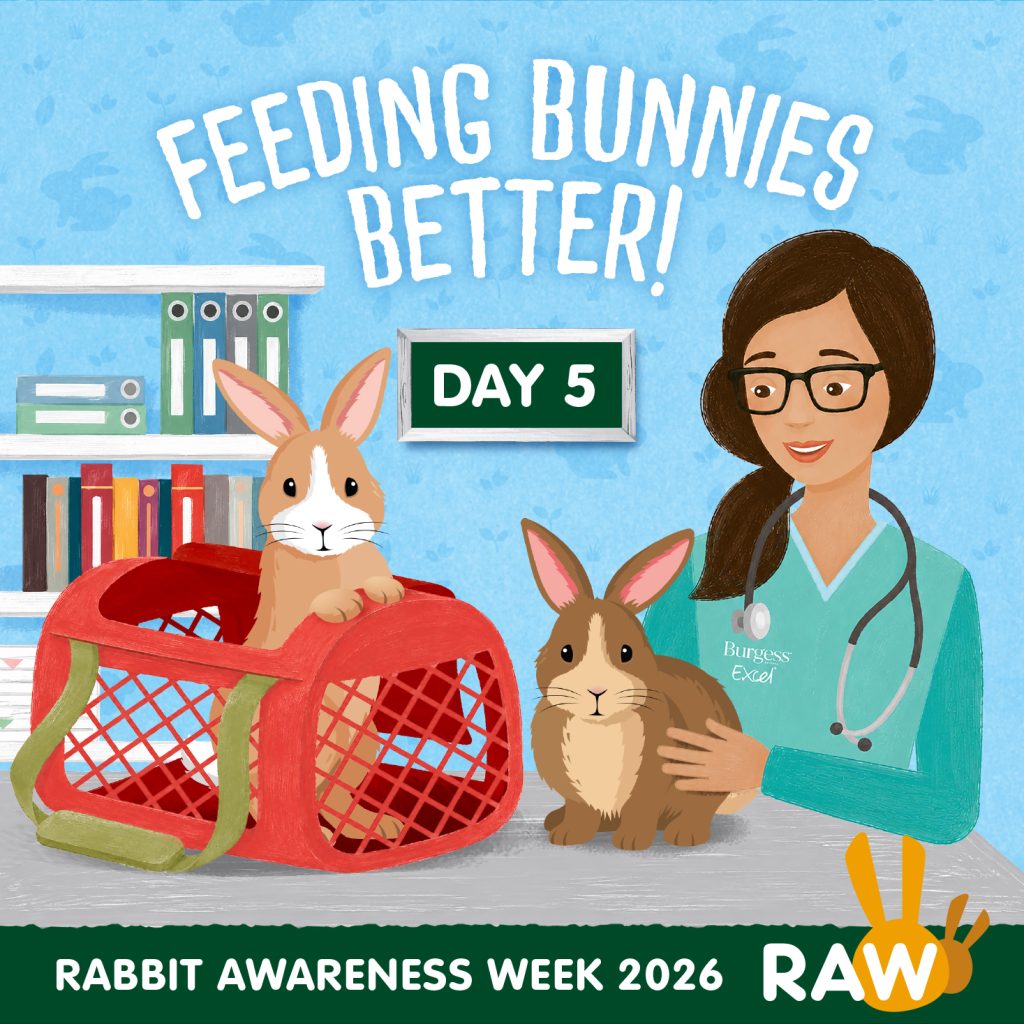
It’s officially the last day of Rabbit Awareness Week (RAW) 2026, but don’t forget that we are running free nurse-led rabbit health checks until Friday 3rd July. Give us a ring on 01922 411755 to book your bunny in. Make sure you don’t miss out!
For their 20th anniversary, RAW have created a fabulous ‘Feeding Bunnies Better’ recipe book: 20 recipes for 20 years, full of creative and fun ways to feed rabbits nutritiously. Check out their recommended delights from field, herb patch and garden for new interest at bunny mealtimes by clicking on this link. The Summer Cool Platter on page 9 looks particularly apt for this weather!
The Rabbit Awareness Action Group brings together the expertise of RAW partners to help continue to raise awareness around rabbit welfare and improve the lives of rabbits. Led by Burgess Pet Care, the RAAG comprises the RSPCA, Rabbit Welfare Association & Fund (RWAF), Blue Cross, Wood Green The Animals Charity and Raystede Centre for Animal Welfare. Collectively holding an impressive bank of rabbit knowledge and expertise, who better to advise and raise awareness around rabbits’ five welfare needs: behaviour, companionship, diet, environment and health. Visit RAAG’s website for more information around these areas and to access a digital version of their rabbit care guide.
Wellcare World specializes in providing the latest advancements in wellness technology, supplementation, and lifestyle changes that improve health and increase the quality of people's lives.To learn more, visit WellcareWorld.com and begin living a better life today.
Cats have a reputation for being inscrutable and It’s well known that it’s hard to spot when a cat is in pain, so the Feline Grimace Scale is an important breakthrough to help veterinarians recognize the signs in their feline patients. New research shows that cat guardians can use the scale too.
This is great news for cats because it means people can more easily assess when their cat needs to go to the vet due to acute pain.
Dr. Beatriz Monteiro of the City University of Hong Kong, the first author of the paper, told me,
“This is the first study showing that cat caregivers are able to assess acute pain (e.g. pain after surgery, abdominal pain) in cats. It is a great advance for feline welfare as cat caregivers become empowered to detect and quantify pain in their cats using the Feline Grimace Scale, and to look for veterinary care if needed.”
The Feline Grimace Scale involves looking at five aspects of the cat’s face, called action units: the cat’s ear position, orbital tightening (around the eye), muzzle tension, the position of the whiskers, and the position of the head. Looking at an awake cat who is not busy doing things like grooming, each action unit is assessed as 0 (absent), 1 (moderately present, or uncertain), or 2 (obviously present). A score of 4 or above is taken to mean that the cat is in pain.
Veterinarians can use the scale alongside their exam, the cat’s history, and clinical situation to decide if pain relief is needed.
The current study was conducted in both English and Spanish and advertised for participants on various cat, pet, and vet websites and social media accounts. The survey got a total of 1262 complete responses from cat guardians, who were asked to read the training manual and then score 10 photos of cats for each of the 5 action units. People’s responses were compared to those of 8 veterinarians.
The results showed no difference between cat guardians and veterinarians on 4 of the 5 action units. The exception was muzzle tension, which seemed to be harder for cat guardians to assess.
People’s success in using the scale was evident across the board, showing that everyone found it easy to use, regardless of gender, age, or other demographic characteristics.
This broad level of agreement is good news for cats as it means that cat guardians can look at the information on the Feline Grimace Scale website and use it to evaluate whether their cat is currently in pain. The scale is also available via an app for Android and Apple.
In case you are wondering about the photos of the cats used in the study, they had been used in previous studies too and were taken of cats before and after surgery, or before and after pain relief, for cats who had a painful condition or happened to need surgery.
It’s important to note that the scale was developed for acute pain only, such as pain after surgery, after suffering from trauma, from a wound, or because of pancreatitis. This scale cannot be used to assess chronic pain such as from osteoarthritis.
If you’d like to use the scale, you can read the training manual and practice your skills on the Feline Grimace Scale website. And if you’d like to read more about this research, the paper is open access and the link is below.
If you liked this post, check out my book Purr: The Science of Making Your Cat Happy. “Enjoyable, approachable, easy to read, Purr is a must for anyone who shares their life with a cat.”—Kate LaSala, Rescued by Training.
Monteiro, B. P., Lee, N. H., & Steagall, P. V. (2023). Can cat caregivers reliably assess acute pain in cats using the Feline Grimace Scale? A large bilingual global survey. Journal of Feline Medicine and Surgery, 25(1), 1098612X221145499. https://doi.org/10.1177/1098612X221145499
As an Amazon Associate I earn from qualifying purchases. As an Etsy affiliate and Marks and Spencer affiliate, I earn from qualifying purchases.
Wellcare World specializes in providing the latest advancements in wellness technology, supplementation, and lifestyle changes that improve health and increase the quality of people's lives.To learn more, visit WellcareWorld.com and begin living a better life today.
Getting your lazy dog up and moving is crucial for their overall health and well-being. Just like humans, dogs require regular exercise to maintain a healthy weight, build strong muscles, and keep their minds sharp. If you notice that your dog is particularly inactive and lacking in motivation, there are several strategies you can employ to encourage them to be more active.
“Exercise is not only beneficial for dogs’ physical health but also vital for their mental well-being.”
Start by gradually increasing their daily exercise routine, incorporating activities such as brisk walks, interactive play sessions, and stimulating games of fetch. Introduce them to new environments like parks or hiking trails to provide mental stimulation and excitement. Additionally, provide them with engaging toys and puzzles to keep their minds occupied and prevent boredom.
Remember to consult with your veterinarian to develop an appropriate exercise plan tailored to your dog’s age, breed, and health condition. They can offer valuable guidance on the type and duration of exercise suitable for your dog. With a little effort and creativity, you can inspire your lazy dog to embrace a more active lifestyle, leading to improved overall health and happiness.
Just like humans, exercise is crucial for dogs to maintain optimal health and well-being. It helps them burn off excess energy, maintain a healthy weight, build strong muscles, and keep their minds sharp. However, not all dogs are naturally inclined to be active, and some may prefer lounging on the couch or taking naps rather than going for a walk or engaging in physical activities.
Encouraging Exercise for a Healthy and Active Dog
If your dog tends to prioritize rest over exercise, there are a few things you can do to encourage them to get moving:
Start Slowly:
Begin with short, leisurely walks around the block or in a quiet park. Gradually increase the duration and intensity of the walks as your dog becomes more comfortable and gains stamina.
Find Activities They Enjoy:
Experiment with different activities to discover what your dog enjoys the most. Some dogs may prefer playing fetch, chasing toys, or participating in agility training, while others may enjoy swimming or hiking. By finding activities that align with your dog’s preferences, they will be more motivated to engage in physical exercise.
Make It Interactive:
Engage in interactive play sessions with your dog using toys such as ropes, balls, or puzzle toys that dispense treats. This not only provides physical exercise but also stimulates their mental abilities.
Play with Other Dogs:
Arrange playdates with other friendly and well-behaved dogs. Social interactions and playtime with other dogs can be highly stimulating and encourage your dog to be more active.
Provide Mental Stimulation:
Dogs also need mental stimulation to keep their minds active and prevent boredom. Use puzzle toys, treat-dispensing toys, or training sessions to challenge their cognitive abilities and keep them mentally engaged.
Set a Routine:
Establish a consistent exercise routine for your dog. Dogs thrive on routine, so having set times for exercise can help motivate them and make it a regular part of their daily routine.
Be Patient and Positive:
Encourage your dog with praise, treats, and positive reinforcement when they engage in physical activities. Patience and positive reinforcement will go a long way in motivating your dog to be more active.
Remember, it’s important to consult with your veterinarian before starting any new exercise regimen for your dog, especially if they have any health conditions or are elderly. Your vet can provide guidance on the appropriate amount and type of exercise for your dog’s specific needs.
Overall, while some dogs may naturally prefer relaxation, with a little patience, creativity, and positive reinforcement, you can help motivate your dog to incorporate regular exercise into their routine and enjoy the numerous benefits it brings to their overall health and happiness.
Wellcare World specializes in providing the latest advancements in wellness technology, supplementation, and lifestyle changes that improve health and increase the quality of people's lives.To learn more, visit WellcareWorld.com and begin living a better life today.
The post How to Choose a Good Dog Food by Mike Clark appeared first on Dogster. Copying over entire articles infringes on copyright laws. You may not be aware of it, but all of these articles were assigned, contracted and paid for, so they aren’t considered public domain. However, we appreciate that you like the article and would love it if you continued sharing just the first paragraph of an article, then linking out to the rest of the piece on Dogster.com.
Today we have many options on the dog food market. So, how do you decide on a healthy, good dog food for your pup? Here are four things to keep in mind.
Opt for the best-quality ingredients. Dr. Gary Richter, founder of Ultimate Pet Nutrition, says, “Optimal nutrition comes from a balanced, fresh, whole food diet.” In order to create that type of diet for your dog, Dr. Richter recommends, “following a balanced recipe or purchasing a commercially prepared, fresh food diet — cooked, raw or freeze-dried are all fine.”
Factor in your dog’s activity level and weight. Richter advises, “There aren’t really different nutritional profiles specific to breed; although, activity does play a role. More active dogs will need more food/calories than less active dogs.” So, if you have a more athletic dog, they will require more calories, but if they slow down due to medical issues or age, you may need to reduce their caloric intake.Studies prove that dogs kept at a healthy body condition live up to 2.5 years longer than overweight dogs. For overweight dogs, therapeutic weight loss diets contain less than 260 calories per cup compared to maintenance diets that range from 325 to 500 calories per cup.
Narrow your options by your dog’s age. Dog food is formulated for your dog’s stage of life. Puppies, for example, need a higher percentage of protein to make up their diet. They should not eat food formulated for adult dogs. Senior dogs, on the other hand, may be more prone to medical conditions that affect dietary needs and their reduced activity level will also mean that they’ll need reduced calories in their food. VCA Animal Hospitals advises reducing senior dogs’ calorie intake by 20 to 30 %. Ask your veterinarian for further recommendations. They may also recommend additional vitamins and supplements for seniors to maintain good health.
Talk to your veterinarian about your dog’s medical needs. An appropriate diet can actually improve your dog’s condition in many cases.
Dr. Richter says, “Almost any chronic condition in dogs (organ disease, allergies, GI upset, etc.) all can be improved/supported with a fresh diet formulated for that specific condition.”
For example, when it comes to dental issues such as gingivitis, Dr. Richter again recommends fresh, whole foods. This can also help with allergies as “fresh diets will have fewer carbohydrate fillers than kibble,” he says. Dogs with diabetes benefit from a low-fat diet that is high in insoluble fiber. Dogs with skin conditions may require more Omega-3 fatty acids, and studies from nonprofit Ketopet, which studies dog diets and cancer, suggest that canines suffering from certain forms of cancer may benefit from a ketogenic diet.
Your dog’s ideal diet may change over time. Dog breed may have an effect on these factors, but that doesn’t mean every dog of a certain breed should have the same diet. Watch for food sensitivities or allergies. If your dog has a poor reaction to certain foods or seems to have chronic gastrointestinal issues, you may need to try an elimination diet with the help of your veterinarian to find out which foods are causing your pet’s distress.
Your dog is an individual with particular dietary needs, and you may not be able to get all the answers you’re looking for from one article. The best thing to do is to consult a certified nutritionist, your veterinarian or a professional pet care specialist who is familiar with your specific dog. You may choose to buy prepared food for your dog or prepare it yourself, but always follow a nutritionist approved recipe, and make sure to choose dog-safe foods.
The post How to Choose a Good Dog Food by Mike Clark appeared first on Dogster. Copying over entire articles infringes on copyright laws. You may not be aware of it, but all of these articles were assigned, contracted and paid for, so they aren’t considered public domain. However, we appreciate that you like the article and would love it if you continued sharing just the first paragraph of an article, then linking out to the rest of the piece on Dogster.com.
Wellcare World specializes in providing the latest advancements in wellness technology, supplementation, and lifestyle changes that improve health and increase the quality of people's lives.To learn more, visit WellcareWorld.com and begin living a better life today.
This idea of taking your dog to a dog park is not a good one.
Why? Because dog parks are dangerous.
Let’s dive right in.
Introduction:
Dog parks have become popular places for dog owners to let their furry friends socialize, exercise, and have fun. However, despite their apparent benefits, dog parks can also pose risks to both dogs and their owners. In this article, we will explore some of the reasons why dog parks can be dangerous and highlight important considerations for pet owners.
Here’s Why Dog Parks are Dangerous
#1) It’s Not Natural For Your Dog
Dogs learn dominant and submissive behavior and how to interact with other dogs during a critical stage from 6 to 8 weeks of age. When dogs are thrown into a dog park with unfamiliar dogs, they need to establish dominance and submission, which can lead to conflicts and even fights. Dog parks are dangerous because dogs are not trained, not on leashes, and owners often lack knowledge in dog handling, especially during fights.
#2) Health Problems are Why Dog Parks Are Dangerous
Dog parks allow anyone to enter, including owners who haven’t given their dogs proper vaccinations. This poses a risk for the spread of sickness and disease, as dogs can cough, lick, and breathe on each other without precautions. The lack of control over the health status of dogs in the park contributes to the danger.
#3) Temperament
Dog parks often lack temperament testing for the dogs before allowing them in. This absence of screening increases the risk of aggressive or incompatible dogs being present in the park, leading to potential conflicts and dangerous situations.
Conclusion:
Dog parks carry inherent risks due to the unnatural social environment they create for dogs, the potential for the spread of diseases, and the lack of temperament testing. It’s important to be aware of these dangers and consider alternative options for socializing and exercising your dog. Always prioritize your dog’s safety and well-being by providing controlled and safe environments for socialization.
“Dog parks are not a safe place to socialize a puppy under 6-12 months old,” he continued. “During our puppy’s early months, they are more sensitive to experiences, so a rambunctious greeter at the park may be enough to cause our puppy to be uncertain of all dogs,” Mr. Hof explained.
Wellcare World specializes in providing the latest advancements in wellness technology, supplementation, and lifestyle changes that improve health and increase the quality of people's lives.To learn more, visit WellcareWorld.com and begin living a better life today.