Why You Should Add Sweet Potatoes To Your Diet
Diet is an important part of your life. Having a healthy diet constitutes a healthy life. Sweet potatoes belong to a starchy family which is enriched in nutrients.
“Fuel your body with the goodness of sweet potatoes, packed with essential nutrients and antioxidants for optimal health and vitality.”
They contain all the supplements important for your overall fitness. If you are an athlete, adding sweet potatoes to your diet is the best choice.
Table of Contents
- 1. What are Sweet Potatoes?
- 2. Nutrients and Vitamins in Sweet Potatoes
- 3. Sweet Potatoes Vs. Regular Potatoes
- 4. Reasons to Add Sweet Potatoes to Your Diet
- 4.1. Low Glycemic Acid
- 4.2. Weight Management
- 4.3. Muscle Strength
- 4.4. Rich in Fiber
- 4.5. Best Source of Complex Carbs
- 4.6. Cardiovascular Health
- 4.7. Support Immune System
- 4.8. Abundant in Nutrients
- 4.9. No.1 Source of Antioxidants
- 4.10. Reduces Inflammation
- 4.11. Efficient Brain Functioning
- 4.12. Enhanced Vision
- 5. Sweet Potatoes – Also Great for Your Skin
- 6. How can you Intake Sweet Potatoes?
- 7. FAQs
- 8. Takeaways
1. What are Sweet Potatoes?
Sweet potatoes are root vegetables great for your diet. It is abundantly found in the tropical regions of America. They are from the root vegetable family called the morning glory. In appearance, they are similar to regular potatoes but vary in shape and color.
There are many types of sweet potatoes. Some have white-colored flesh while others have yellow, red, and even purple mellow. The root vegetables belonging to the glory family are extremely rich in nutrients. They have a starchy and sweet taste. When boiled, they become soft and stringy.
2. Nutrients and Vitamins in Sweet Potatoes
Sweet potatoes are rich in nutrients. These nutrients consist of vitamins and minerals.
Vitamin A:
Sweet potatoes are an excellent source of vitamin A. One medium-sized sweet potato provides more than 400% vitamin A as compared to other sources. Vitamin A is great for vision, immunity, and skin health.
Vitamin C:
Sweet potatoes are also a good source of vitamin C. It provides greater immunity and a lower risk of injury.
Potassium:
Sweet potatoes are rich in potassium, an important mineral that helps regulate blood pressure and fluid balance in the body. It minimizes the risk of strokes.
Fiber:
Sweet potatoes are a good source of dietary fiber, which can help regulate digestion, prevent constipation, and lower cholesterol levels.
Manganese:
Sweet potatoes are a good source of manganese, a mineral that supports bone health and helps the body metabolize carbohydrates and proteins. It forms connective tissues in your body.
B Vitamins:
B vitamins are water-soluble vitamins that convert food into energy. They help your body metabolize carbohydrates, fats, and proteins into glucose.
Calcium:
Calcium is great for bone health and the transmission of nerve impulses. It plays a key role in muscle contraction, relaxation, and teeth health.
Iron:
Iron is a key component of hemoglobin. It helps to create adenosine triphosphate (ATP) and maintains a healthy immune system.
Magnesium:
It helps to regulate the calcium levels in the bones. It relieves anxiety and depression.
Phosphorous:
It works with calcium to create a mineral complex that forms the structure of bones. It is involved in protein synthesis and is an essential component of DNA and RNA.
Thiamin:
It is also called vitamin B1. It is necessary for cardiovascular health and brain functioning.
Zinc:
It activates white blood cells for wound healing. It repairs damaged tissues and is important for reproductive health in both men and women.
Other Nutrients:
Sweet potatoes also contain small amounts of other nutrients such as calcium, iron, magnesium, phosphorus, and zinc.
3. Sweet Potatoes Vs. Regular Potatoes
Sweet potatoes and regular potatoes both are starchy vegetables but they differ in their nutritional content and health benefits. Sweet potatoes have a greater nutritional value due to the presence of beta carotene and vitamin A.
Sweet potatoes are higher in beta carotene which is a precursor to vitamin A and is important for eyes and better immunity. Regular potatoes, on the other hand, are higher in potassium, which is necessary for regulating blood pressure and heart health. Sweet potatoes have a greater quantity of antioxidants as compared to regular potatoes.
3.1. Nutritional Value – Sweet & Regular Potatoes
| Nutrients | Regular Potato | Sweet Potato |
|---|---|---|
| Carbs | 37 g | 24 g |
| Sugar | 3 g | 7 g |
| Calories | 159 | 103 |
| Fiber | 4 g | 4 g |
| Protein | 4 g | 2 g |
| Fat | 0.3 g | 0.2 g |
Vitamins
| Vitamins | Regular Potato | Sweet Potato |
|---|---|---|
| A | 17 UI | 21,900 IU |
| C | 22 mg | 22 mg |
| B6 | 0.4 mg | 0.3 mg |
Minerals
| Minerals | Regular Potato | Sweet Potato |
|---|---|---|
| Potassium | 941 mg | 542 mg |
| Magnesium | 47 mg | 31 mg |
| Iron | 1 mg | 0.8 mg |
| Calcium | 17 mg | 43 mg |
| Manganese | 0.3 mg | 0.6 mg |
4. Reasons to Add Sweet Potatoes to Your Diet
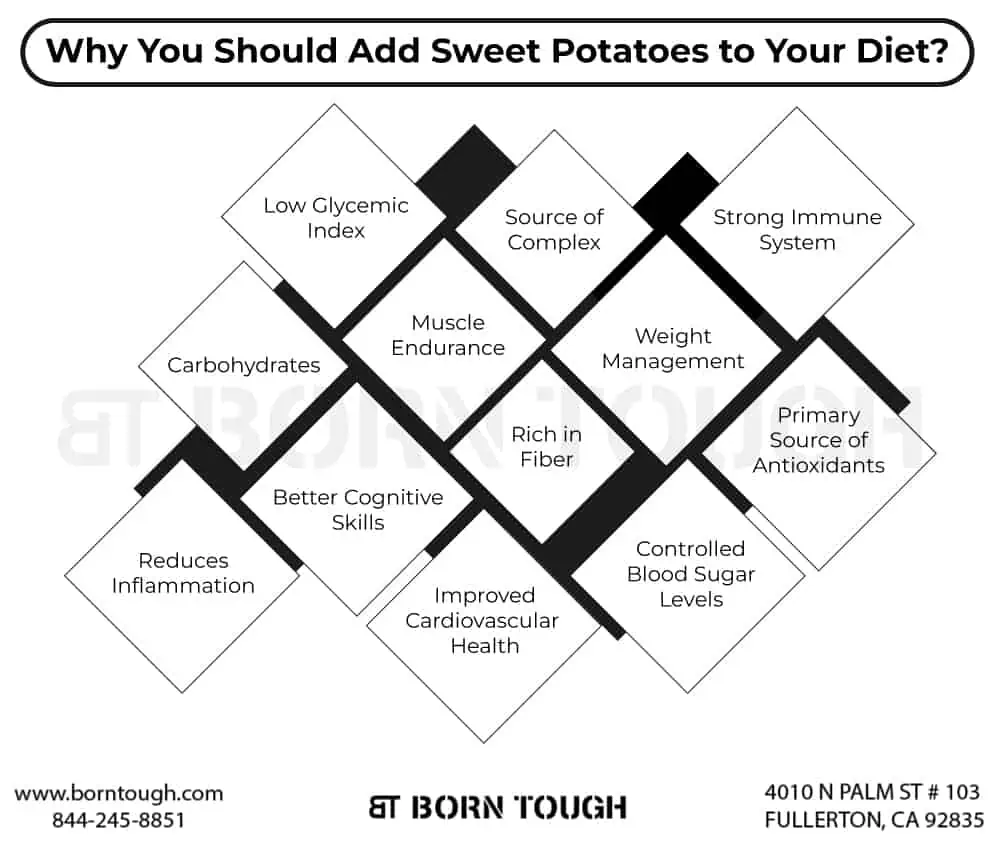
Sweet potatoes are famous because of their benefits. Not only do they help you build and strengthen muscles but also benefit you on so many levels. They help you build excellent cognitive skills and are also great for your overall body health.
4.1. Low Glycemic Acid
Sweet potatoes have a lower glycemic index (GI) than other starchy foods. It slowly releases sugar into the bloodstream and helps to regulate blood sugar levels. Mainly because sweet potatoes contain complex carbohydrates and fibers, which are digested and absorbed more slowly than simple carbohydrates.
The glycemic index is a measure of how quickly a food raises blood sugar levels. This helps prevent hunger and overeating. Foods with a high GI are digested and absorbed quickly and cause a rapid increase in blood sugar levels as compared to foods with a low GI. Sweet potatoes have a GI ranging from 44 to 94, depending upon the variety, cooking methods, and ripeness.
They are a good choice for people looking to manage their blood sugar levels, especially when consumed in moderation as a part of a balanced diet. If you suffer from diabetes, sweet potatoes are great for you.
4.2. Weight Management
Sweet potatoes are low in calories and high in nutrients, which means they are great for weight management. The calorie count in sweet potatoes is just 145 kcal per 100 grams. It means you can eat a lot of sweet potatoes without consuming too many calories.
They are packed with nutrients such as vitamins A, C and potassium. These nutrients help support a healthy metabolism and weight loss. The nutrient-to-calorie ratio in sweet potatoes is perfect. Antioxidants like zinc superoxide, sporamins, and catalase help you to build muscle mass. Sweet potatoes are great for you whether you aim for weight loss or weight gain.
4.3. Muscle Strength
Your muscles gain strength by consuming the right amount of nutrients. They replenish your energy levels and induce strength in your muscles and tendons. Vitamin C synthesizes collagen, a protein that provides structures to muscles. Collagen helps support muscle growth and repair.
Beta-carotene, on the other hand, helps support protein synthesis and cell differentiation.
4.4. Rich in Fiber
Sweet potatoes are rich in fiber because they contain both soluble and insoluble fiber. Soluble fiber dissolves in water and forms a gel-like substance in the digestive tract, which helps to lower cholesterol levels. Insoluble fiber does not dissolve in water, promotes regular bowel movements, and prevents constipation.
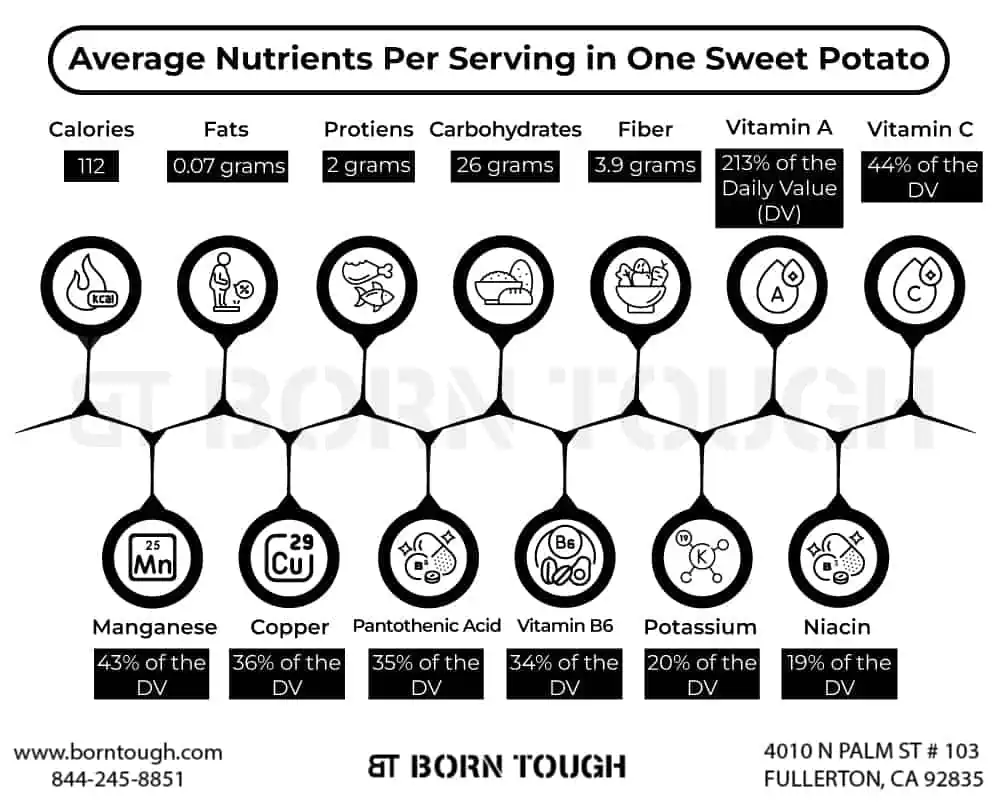
Sweet potatoes contain about 3 to 4 grams of fiber per 100 grams of raw sweet potato. Eating the scalp of the sweet potato can also increase the fiber content. Food rich in fiber works wonders for your weight loss.
4.5. Best Source of Complex Carbs
Sweet potatoes are one of the best sources of carbs for the human body. We all are aware of the benefits of carbs. They are our body’s number one source of energy. Carbs are the first ones to break down in the body and we acquire immediate energy from them.
On the other hand, sweet potatoes contain complex carbs. These carbs take time to break down and provide long hours of energy. One medium-sized sweet potato contains approximately 26 grams of carbohydrates, with about 4 grams coming from fiber and 5 grams coming from sugar.
4.6. Cardiovascular Health
Cardiovascular health is one of the perks of eating sweet potatoes. Sweet potatoes are rich in potassium which is an important mineral for maintaining healthy blood pressure. High blood pressure is a risk factor for the heart, and having enough potassium keeps blood pressure in check.
Greater amounts of potassium intake help you to excrete more sodium. The excretion of more sodium eventually leads to great heart health.
4.7. Support Immune System
Sweet potatoes support your immune system by increasing vitamins A and C in your body. They are a wonderful source of beta-carotene which is converted into vitamin A in the body. Vitamin A maintains the health of skin and mucous membranes that act as a barrier against infections.
It activates the production of white blood cells that constitute your body’s natural defense system. Sweet potatoes are responsible for helping in the growth of healthy gut bacteria. A healthy gut microbiota is essential for a strong immune system function.
4.8. Abundant in Nutrients
Sweet potatoes are abundant in nutrients. The human body needs those nutrients to function properly. Whether you are an athlete or not, you constantly need nutrients for a healthy lifestyle. Sweet potatoes may seem less in nutrients but they are the best starchy vegetables when it comes to vitamins and minerals.
It provides 25% of the daily requirement of manganese, 20% of the daily value of copper, and 12% of the daily value of potassium. They help in enhancing muscle and bone health, regulating blood, sugar, and cholesterol levels, production of sex hormones, and forming white blood cells for your natural defense.
4.9. No.1 Source of Antioxidants
Sweet potatoes are high in antioxidants such as beta carotene. Antioxidants help in neutralizing free radicals which are unstable molecules that cause inflammation. One cup of baked sweet potato provides enough beta-carotene for 2 days.
4.10. Reduces Inflammation
Sweet potatoes reduce inflammation in your body as they have anti-inflammatory properties. Chronic inflammation can weaken your immune system so consuming sweet potatoes strengthens your immune system.
Sweet potatoes contain anthocyanins and phenolic acid. These compounds reduce the stimulation of inflammatory cells. Reduced inflammation means fewer chances of cardiovascular diseases. The beta carotene present in sweet potatoes fights inflammation and keeps the immune system tip-top.
4.11. Efficient Brain Functioning
Potassium of sweet potatoes is responsible for efficient brain functioning. Lower levels of potassium often induce poor cognitive skills. A regulated blood sugar level prevents sudden spikes and crashes in energy levels and maintains healthy brain functioning.
The glucose converted from complex carbohydrates helps improve cognitive performance. The antioxidants protect your brain from oxidative stress. Especially in orange-fleshed sweet potatoes, carotenoids are present in larger amounts. These carotenoids prevent brain degenerative diseases such as Alzheimer’s.
4.12. Enhanced Vision
Vitamin A present in sweet potatoes enhances your vision. It helps you see better in dark by forming light-detecting receptors. Purple sweet potatoes are a great source of vitamin A.
5. Sweet Potatoes – Also Great for Your Skin
Despite all the advantages of sweet potatoes, they are also good for your skin. Your skin looks fresh and healthy. It promotes healthy skin tissue and prevents dryness and flakiness. Antioxidants safeguard your skin from radical damage. Sweet potatoes contain water which keeps your skin hydrated at all times.
Collagen helps in enhancing flexibility in your skin and gives it a smooth texture. Apart from skin, sweet potatoes are also known for their cancer-fighting properties. They contain anthocyanins which slow the growth of cancerous cells.
6. How can you Intake Sweet Potatoes?
Sweet potatoes can be taken in various forms. You can make sweet potato pancakes or sweet potato salad. You can boil them or eat them in the form of fries.
7. FAQs
7.1. Are Sweet Potatoes Great for Females?
Sweet potatoes are great for both men and women and especially for women’s reproductive systems.
7.2. Is it okay to Consume Raw Sweet Potatoes?
It is perfectly normal to eat raw sweet potatoes. They do not contain harmful enzymes in their raw state as regular potatoes contain.
7.3. Are there Any Side Effects of Sweet Potatoes?
Larger quantities of sweet potatoes can cause skin rashes and headaches. It is better to take a healthy amount.
7.4. What is the Best Way to Intake Sweet Potatoes?
The best way to intake sweet potatoes is by having them in soup or salads. You can also go for mashed sweet potatoes. Their calories and nutrients do not drop down by taking them into a boiled state.
8. Takeaways
Sweet potatoes belong to the morning glory family. They are rich in nutrients and vitamins that are extremely necessary for the normal functioning of the human body. They contain vitamins A, C, and B. Magnesium, calcium, sodium, and potassium are constituents of sweet potatoes.
Having a lower glycemic index, sweet potatoes keep the blood sugar level in check. They are responsible for your cardiovascular health and muscle strength. They improve your vision and cognitive skills.
“This article is originally posted on borntough.com, and borntough.com own the sole copyright on this article. If you read this article outside borntough.com, please report this website to the authority because they have stolen the content from borntough.com and violated borntough copyright”

Offered by our Wellcare World friend at
Trending Also -> Physiotherapy Terahertz Technology TeraMD
Wellcare World specializes in providing the latest advancements in wellness technology, supplementation, and lifestyle changes that improve health and increase the quality of people's lives. To learn more, visit WellcareWorld.com and begin living a better life today.
Share Us With Others