As an accredited Dog Friendly Clinic with Dogs Trust and The British Veterinary Behaviour Association, we’re super keen to help make in-patient visits as stress-minimal as possible. We phone owners ahead of patient admit to go through a care plan which includes questions about pet preferences and behaviours so that we can adapt care in practice accordingly. We ask that pets bring items from home with them for comfort and the familiar smell of home. A favourite blanket and teddy is perfect. We’ll also ask if owners can provide a portion of their dog’s favourite food for post procedure. Whilst we’re happy to provide food, we find pets often prefer what they and their tummy are used to. We have raised water bowls for bigger breeds and older pets.
In kennels, we make sure patient spaces are comfy and cosy. We drape towels over the front half of the kennel door too. Whist no kennel faces any other, this gives patients an extra sense of security if they want to tuck themselves away. We have three walk-in kennels on ward in addition to a host of other kennels to accommodate larger breeds, as well as a completely separate walk-in isolation kennel which we use for especially anxious patients, as well as medical cases warranting separation. We play gentle soothing music on ward and we keep treats and licki mats to hand for encouragement where some form of food is allowed.
We have a secure, enclosed toileting area directly off kennels. We have a patch of astro turf in our run for dogs who prefer to toilet on grass. If dogs like to potter before toileting, no problem. If they like company, that’s no problem too! We have dedicated kennels nurses specifically responsible for in-patient care and comfort.
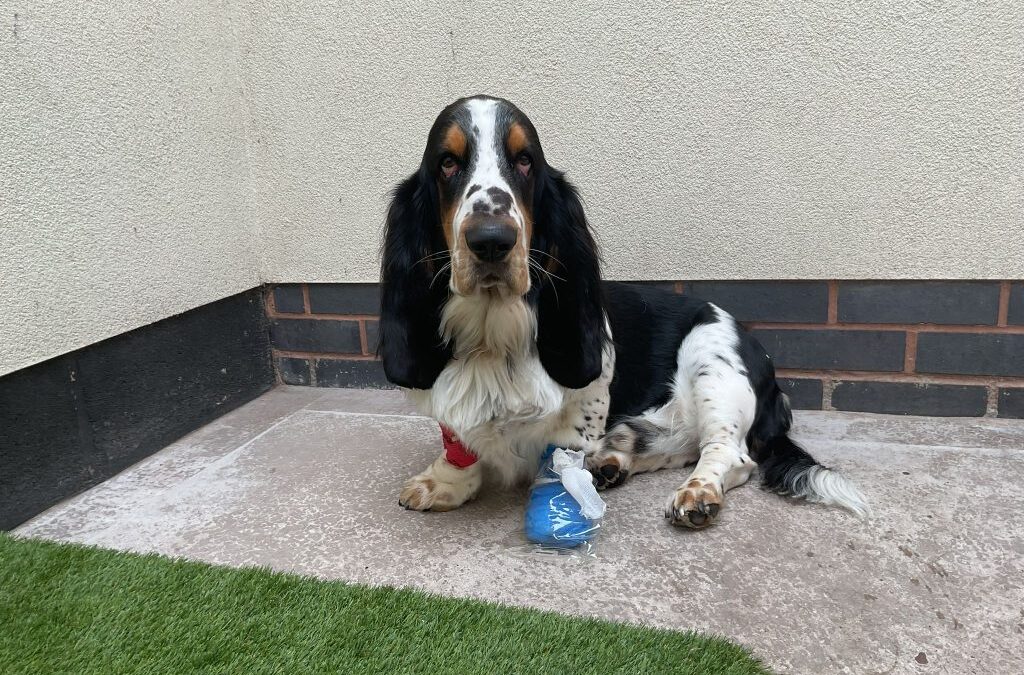
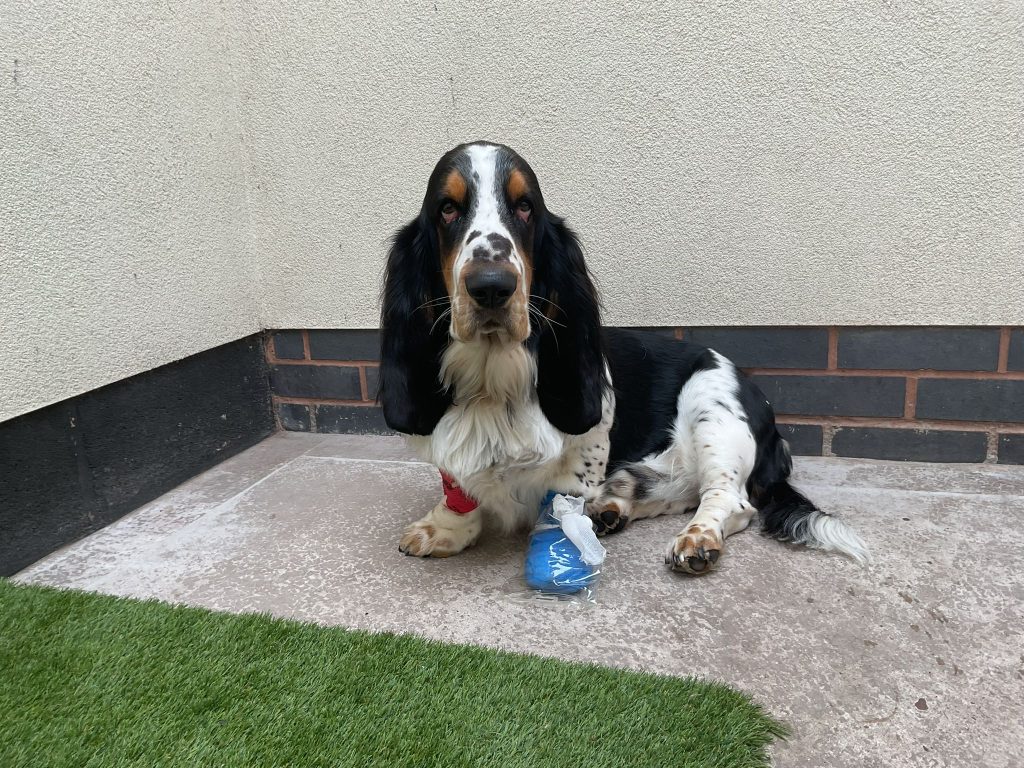
Here are gorgeous Bez and Jasper beautifully modelling a few of our Dog Friendly Clinic inpatient initiatives. Both brought their teddies who were also given a health check during their stay!
Wellcare World specializes in providing the latest advancements in wellness technology, supplementation, and lifestyle changes that improve health and increase the quality of people's lives.To learn more, visit WellcareWorld.com and begin living a better life today.
Rabbit Awareness Week (RAW) is celebrated annually in order to promote the health and welfare of pet rabbits and to raise awareness about the unique needs of one of the UK’s favourite pets.
RAW runs from 23rd – 27th June and the focus for 2025 is ‘Happy Hoppy Homes.’ Did you know that rabbit homes should have a minimum footprint of 3m x 2m so that bunnies can hop and run, and that they should be 1m in height so they fully stretch upright without their ears touching the roof.
Introducing different levels in a bunny home is great for enrichment and for separating feeding, resting and exercise spaces. Get creative with tunnels to maximise bunny fun! And don’t forget lots of fresh straw bedding so bunnies can snuggle and keep cosy.
Rabbits love to play, and toys enable them to exhibit natural behaviours like digging, jumping and chewing. You can stuff cardboard tubes with hay and healthy treats as engagement activity, provide a digging box filled with shredded paper and include wickers toys that rabbits can toss and chew. Remember to include plenty of hiding places, which could even be cardboard boxes which rabbits can chew too!
Rabbits are sociable soles and are happiest with another rabbit companion, but make sure they are neutered! Ask us for tips on introducing a new friend to your rabbit’s home as this needs to be carefully managed for optimum results.
The Rabbit Awareness Action Group have heaps more great advice on helping rabbit owners to create a ‘Happy Hoppy Home’. Click here to download your free Rabbit Awareness Week Owner Pack from the group’s website, and make sure you follow Rabbit Awareness Week on Facebook and other social media channels for top tips on helping bunnies to live their best life!
Wellcare World specializes in providing the latest advancements in wellness technology, supplementation, and lifestyle changes that improve health and increase the quality of people's lives.To learn more, visit WellcareWorld.com and begin living a better life today.
The Interplay of Time, Space, Choices, and Online Chats about Purr
Time, space, choices, and an online chat about purr encompass a diverse range of intriguing subjects. Time, as a concept, captivates us with its enigmatic nature and the various ways it shapes our lives. Exploring the vast expanse of space unveils celestial wonders, from distant galaxies to the mysteries of black holes. Choices hold immense power, influencing our personal growth and shaping our destinies. Meanwhile, engaging in an online chat about purr brings together cat enthusiasts, fostering connections and sharing the joys of feline companionship virtually. These topics invite contemplation, wonder, and the exploration of both inner and outer worlds.
How my book Purr: The Science of Making Your Cat Happy can help shelter cats.
Zazie Todd’s cat Melina was adopted from the BC SPCA. She’s pictured in front of the book she helped inspire, and in which she features. Photo: Zazie Todd.
By Zazie Todd PhD
This page contains affiliate links which means I may earn a commission on qualifying purchases at no cost to you.
It is all about how the tips in Purr: The Science of Making Your Cat Happy can help cats in shelter and rescue, as well as once they move to their new home. As you might guess from the title, giving the cat time to settle in, setting up their space right, and giving them choices (including letting them make the choice to hide) are all important.
This event is free for all members of The Pet Professional Guild. If you’re a cat guardian, membership of the PPG is free. For pet professionals, the PPG is committed to force-free methods only and a membership is very worthwhile.
Wellcare World specializes in providing the latest advancements in wellness technology, supplementation, and lifestyle changes that improve health and increase the quality of people's lives.To learn more, visit WellcareWorld.com and begin living a better life today.
The ThunderKAT radio survey keeps constant tabs on objects, such as accreting black holes and magnetized neutron stars, that are known to exhibit big, sporadic changes in their radio flux. The survey also searches for new transient sources. Finding them is primarily done by computer algorithms, but given how good humans are at pattern recognition, the ThunderKAT team wondered if human volunteers could find new transients more effectively. The answer is yes. In a trial that lasted three months, 1000 volunteers discovered 142 new transients [1]. The effort could inform how future transient surveys should be conducted.
ThunderKAT Team Specialists
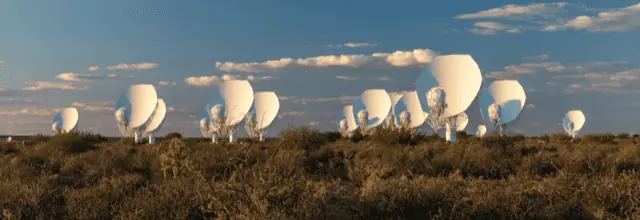
Astronomers have cataloged many types of transients, from x-ray bursters to cataclysmic variables. The variability of these objects arises from explosive, out-of-equilibrium processes under extreme conditions. To better understand these processes, the ThunderKAT team studies transient phenomena in the Southern Sky using MeerKAT, an array of 64 radio telescopes located at a remote site in South Africa’s arid interior. When MeerKAT points at a known transient, ThunderKAT’s algorithms search for other point sources in the array’s 1° × 1° field. If the algorithms find a new transient, the computer program then sifts through archive data to see if radio signals have been observed from the source location during previous MeerKAT observations. If so, the program assembles a light curve, which is a record of the radio flux over time. Whether the new source is classified as a transient depends on how it scores with respect to two variability statistics: η𝜂, which sums over the flux variations with respect to mean, and V, which divides the standard deviation by the mean flux.
The algorithms have identified many new transients, but the team decided to have humans look through some of the data to check whether any objects might have been missed. The data used in the trial extended over two years and came from weekly observations of 11 known transient sources. Within a three-month window, human volunteers evaluated candidates on the citizen science platform Zooniverse. For each candidate, the volunteers faced two tasks. The first was to look at an image and determine if the source in the center was a point source. (Extended sources are outside ThunderKAT’s remit.) The second task was to look at the corresponding light curve and evaluate whether the variability it embodied was significant.
Volunteers Called into Action
The volunteers found the 168 sources that ThunderKAT’s algorithms had already flagged as transient. But they also found 142 more that the algorithms had missed. Those sources turned out to have values of η𝜂 and V that were insufficiently extreme to trigger selection by the algorithms. Humans, it seems, were better at recognizing the normal variability of faint sources.
Astronomer and citizen science proponent Lucy Fortson of the University of Minnesota, Twin Cities, points out that it’s not just pattern recognition that humans excel at. “Humans also need less training data for recognizing patterns,” she says. “They also generalize better and can recognize more readily patterns ‘out of class.’”
New Discoveries
Some of the newly discovered sources turned out to have counterparts that had been observed before by other facilities at other wavelengths. One of them is the red supergiant star OH 30.1–0.7, whose radio emission comes from radiationally pumped hydroxyl radicals in the star’s strong wind. The variability of the radio emission suggests that OH 30.1–0.7 could have a binary companion, but other explanations remain in play.
Observations by the 24-inch MeerLICHT optical telescope, which is co-located with MeerKAT, suggest that the majority of the citizen science identifications are active galactic nuclei. The observed variability of these objects on timescales of months to years is likely not intrinsic. Rather, it arises from a more prosaic effect: refractive interstellar scintillation—twinkling—caused by the passage of extragalactic radio waves through the Milky Way’s turbulent interstellar medium.
Even if only a fraction of the new sources are found to be genuine transients, the ThunderKAT team can use the citizen science findings to tweak their algorithms. In addition, one of MeerKAT’s original goals is to test technologies for the similar, but much larger, Square Kilometre Array (SKA), whose 1000 antennas are expected to start gathering data in 2027. The researchers conclude that the success of ThunderKAT’s citizen science project will improve not only MeerKAT’s data-crunching algorithms but also SKA’s.
A. Andersson et al., “Bursts from Space: MeerKAT – The first citizen science project dedicated to commensal radio transients,” arXiv:2304.14157; Mon. Not. R. Astron. Soc. (to be published).
Wellcare World specializes in providing the latest advancements in wellness technology, supplementation, and lifestyle changes that improve health and increase the quality of people's lives.To learn more, visit WellcareWorld.com and begin living a better life today.